
At a Glance
- Issued by: Environment and Climate Change Canada (ECCC), Canada’s national weather authority responsible for issuing Snow Squall Warnings.1
- Purpose: Alerts the public when dangerous snow squalls are expected or occurring that may produce sudden whiteout conditions and hazardous travel.2
- Primary hazards: Heavy bursts of snow, blowing snow, rapidly reduced visibility, slippery roads, and dangerous driving conditions.3
- Typical duration: Most frontal snow squalls last between 15 and 60 minutes, although lake-effect snow squalls can persist much longer in localized areas.4
- Highest risk: Highway and rural road travel where visibility can drop from several kilometres to near zero within seconds.5
- Most common in Canada: Southern Ontario near the Great Lakes, but snow squalls can also occur across the Prairies, Quebec, Atlantic Canada, and parts of British Columbia under the right atmospheric conditions.6
- Related weather hazards: Whiteout conditions, blowing snow, lake-effect snow, black ice, and winter storms.7
- Related Alerts: Yellow Snow Squall Warning, Orange Snow Squall Warning, Snowfall Warning, Winter Storm Warning, Blizzard Warning, Blowing Snow Advisory, and Wind Warning.
Snow Squall Warning Meaning
A Snow Squall Warning is an official weather alert issued when dangerous snow squalls are expected or occurring that could rapidly reduce visibility and create life-threatening travel conditions.8 In Canada, Snow Squall Warnings are issued by Environment and Climate Change Canada (ECCC) through the Meteorological Service of Canada (MSC), while in the United States they are issued by local forecast offices of the National Weather Service (NWS).9 10
Unlike a Snowfall Warning, which focuses primarily on the total amount of snow expected, a Snow Squall Warning is issued because of the sudden impact on visibility and road safety. Heavy bursts of snow combined with strong winds can create whiteout conditions within seconds, making it difficult or impossible for motorists to see the road, surrounding traffic, or hazards ahead.11
Snow Squall Warnings are issued for two primary types of snow squalls:
Lake-Effect Snow Squalls
Lake-effect snow squalls develop when cold Arctic air moves across relatively warmer, unfrozen lakes, picking up moisture before depositing it as narrow bands of intense snowfall downwind. These snow squalls are common near the Great Lakes and can repeatedly affect the same communities for several hours.12 13
Frontal Snow Squalls
Frontal snow squalls form along or immediately behind fast-moving cold fronts. Although they are typically shorter-lived than lake-effect snow squalls, they can rapidly produce heavy snowfall, powerful wind gusts, and near-zero visibility over a wide area as the front moves through.14
Because snow squalls often develop with little warning and can affect only a narrow corridor, weather conditions may vary dramatically over short distances. Drivers may encounter clear skies one moment and complete whiteout conditions the next, making Snow Squall Warnings one of Canada’s most important winter travel alerts.15
When Is a Snow Squall Warning Issued?
Environment and Climate Change Canada issues a Snow Squall Warning when meteorologists determine that intense snow squalls are expected or already occurring and are likely to create dangerous travel conditions. Unlike a Snowfall Warning, which focuses on the amount of snow expected, a Snow Squall Warning is issued because weather conditions can deteriorate within minutes, posing an immediate risk to motorists and anyone travelling outdoors.16
Weather warnings are based on forecast data, radar observations, satellite imagery, and real-time weather reports. Once forecasters determine that hazardous snow squall conditions are likely, the warning is issued for the affected communities so residents have time to prepare or delay travel.17 18 19
What to Expect During a Snow Squall Warning?
A Snow Squall Warning means weather conditions can change dramatically within minutes. While snow squalls are often localized and short-lived, they can create some of the most hazardous winter driving conditions in Canada. If a warning has been issued for your area, you should be prepared for rapidly changing visibility, snow-covered roads, and dangerous travel.
Sudden Whiteout Conditions
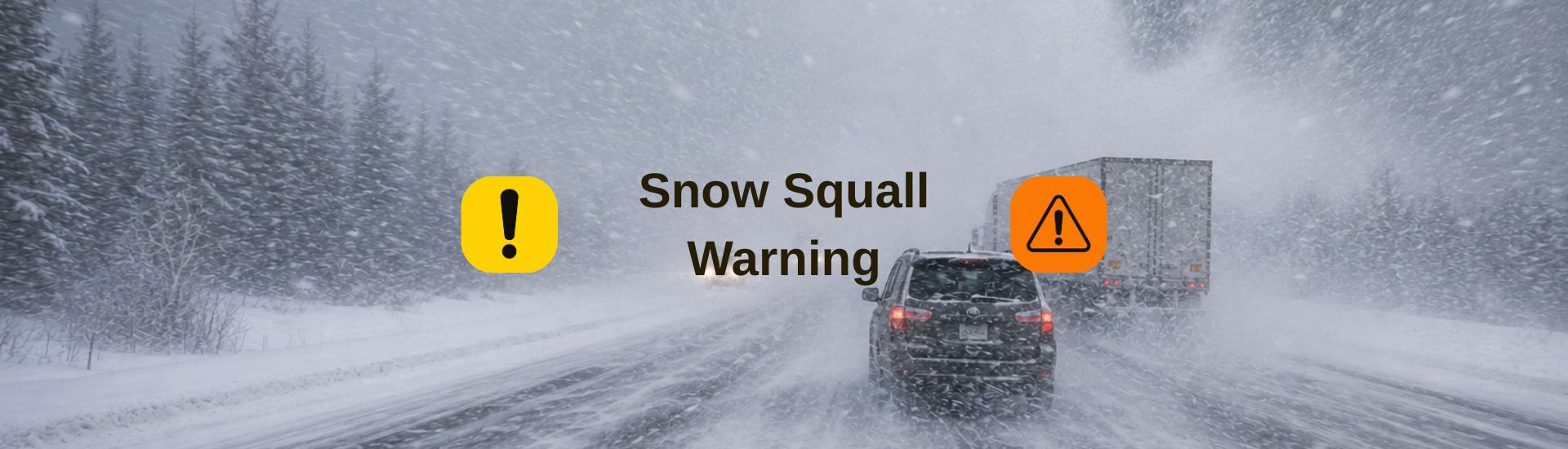
The most significant hazard during a snow squall is the rapid loss of visibility. Heavy snowfall combined with blowing snow can reduce visibility from several kilometres to near zero within seconds, making it difficult to see lane markings, road signs, traffic signals, or vehicles ahead. These whiteout conditions often develop with little warning, giving motorists very little time to react.
Heavy Bursts of Snow
Snow squalls are capable of producing intense snowfall over a short period. Although they usually last less than an hour, snowfall rates can be high enough to quickly cover roads, reduce traction, and create slippery driving conditions before snowplows have an opportunity to clear the affected area.
Strong Winds and Blowing Snow
Many snow squalls are accompanied by strong wind gusts that blow falling and freshly accumulated snow across roadways. Even after the heaviest snowfall has ended, blowing snow may continue to reduce visibility and create drifting snow on exposed highways, bridges, and rural roads.
Rapidly Changing Road Conditions
Road conditions can deteriorate within minutes as fresh snow accumulates and temperatures remain below freezing. Snow-covered pavement, hidden patches of black ice, and reduced traction make braking and steering more difficult, particularly at highway speeds.
Highway Closures and Travel Delays
Snow squalls frequently result in traffic slowdowns, road closures, and multi-vehicle collisions. Because these storms often affect only a narrow area, drivers may encounter dangerous conditions unexpectedly while travelling from otherwise clear weather.20 If a Snow Squall Warning is in effect, consider delaying unnecessary travel until conditions improve.
What Should You Do During a Snow Squall Warning?
If a Snow Squall Warning has been issued for your area, the safest option is to avoid unnecessary travel until conditions improve. Snow squalls can develop quickly and produce dangerous whiteout conditions with little warning, making even familiar roads hazardous. If you must travel, taking the proper precautions can significantly reduce your risk.
If You’re Driving
Reduce your speed as soon as weather conditions begin to deteriorate and increase the distance between your vehicle and the one ahead. Turn on your headlights so other drivers can see you more easily, and avoid sudden braking or sharp steering movements that could cause your vehicle to skid.
If You Encounter a Whiteout
If visibility suddenly drops to near zero, remain calm and slow down gradually. Avoid slamming on the brakes, as drivers behind you may also have difficulty seeing. Continue driving only if it is safe to do so. If conditions become too dangerous, pull completely off the roadway only when you can do so safely. Never stop in an active traffic lane, as approaching vehicles may not see you until the last moment.
Before You Travel
Always check the latest weather forecasts, road conditions, and active weather warnings before leaving. Allow extra travel time, ensure your vehicle is equipped with winter tires, and keep your fuel tank at least half full during the winter months.
Snow Squall Warning vs. Snowfall Warning
Although both alerts warn of hazardous winter weather, a Snow Squall Warning and a Snowfall Warning are issued for different reasons. Understanding the difference can help you better prepare and make safer travel decisions.
| Snow Squall Warning | Snowfall Warning |
|---|---|
| Issued for brief, intense snow squalls | Issued for significant snowfall accumulations |
| Focuses on rapidly changing travel conditions | Focuses on expected snowfall amounts |
| Heavy snow, blowing snow, and sudden whiteout conditions | Steady or prolonged snowfall over several hours |
| Usually affects narrow, localized areas | Often affects larger regions |
| Can reduce visibility to near zero within seconds | Visibility may be reduced but usually changes more gradually |
| Primary concern is immediate travel safety | Primary concern is snow accumulation and widespread impacts |
A Snow Squall Warning is intended to alert motorists to rapidly changing conditions that can become dangerous within minutes, even if little snow ultimately accumulates. By comparison, a Snowfall Warning is issued when a region is expected to receive significant snowfall over a longer period, increasing the risk of difficult travel, snow-covered roads, and disruptions to daily activities.
Frequently Asked Questions
Most snow squalls last between 15 and 60 minutes, although warnings may remain in effect longer if multiple snow squalls are expected to move through the same area.
Not necessarily. Blizzards typically last much longer and affect larger areas, while snow squalls are shorter-lived and more localized. However, snow squalls often produce more sudden visibility reductions, making them especially dangerous for drivers.
If possible, delay unnecessary travel until conditions improve. If you must drive, reduce your speed, increase your following distance, and be prepared for rapidly changing visibility and road conditions.
Snow squalls occur across much of Canada but are especially common in areas near the Great Lakes, including parts of southern Ontario. They also occur behind strong cold fronts across the Prairie provinces and in other regions during the winter months.
A Snow Squall Warning focuses on sudden bursts of heavy snow, blowing snow, and rapidly reduced visibility that create immediate travel hazards. A Snowfall Warning is issued when significant snowfall accumulations are expected over a longer period.
Sources
- https://www.canada.ca/en/services/environment/weather/severeweather/weather-alerts.html ↩︎
- https://www.canada.ca/en/services/environment/weather/severeweather/weather-alerts/weather-impact-guides.html ↩︎
- https://avmet.navcanada.ca/en/snow-squall.aspx ↩︎
- http://weather.gov/safety/winter-snow-squall ↩︎
- https://www.canada.ca/en/services/environment/weather/severeweather/weather-alerts/weather-impact-guides.html#toc9 ↩︎
- https://www.canada.ca/en/services/environment/weather/severeweather/weather-alerts/colour-coded-alerts.html ↩︎
- https://www.canada.ca/en/environment-climate-change/services/seasonal-weather-hazards/severe-winter.html ↩︎
- https://www.canada.ca/en/services/environment/weather/severeweather/weather-alerts/weather-impact-guides.html#toc9 ↩︎
- https://www.canada.ca/en/environment-climate-change.html ↩︎
- https://www.weather.gov/about/ ↩︎
- https://www.weather.gov/safety/winter-snow-squall ↩︎
- https://courses.ems.psu.edu/meteo3/node/2270 ↩︎
- https://en.wikipedia.org/wiki/Lake-effect_snow ↩︎
- https://en.wikipedia.org/wiki/Snow_squall ↩︎
- https://www.weather.gov/safety/winter-snow-squall ↩︎
- https://www.canada.ca/en/services/environment/weather/severeweather/weather-alerts/weather-impact-guides.html ↩︎
- https://www.canada.ca/en/services/environment/weather/severeweather/weather-alerts.html ↩︎
- https://www.canada.ca/en/environment-climate-change/services/weather-general-tools-resources/weathercan.html ↩︎
- https://weather.gc.ca/ ↩︎
- https://weather.com/storms/winter/news/2025-11-23-snow-squall-winter-dangerous-drivers ↩︎