The Best Ski & Snowboard Socks of 2027
Looking for the best ski and snowboard socks for your next day on the slopes? Compare our top picks for warmth, comfort, and value, or explore our Snowboard Accessories buying guides for more gear recommendations.

- Last updated:
Snowstorms is reader supported. When you buy through our links we may earn a commission. Learn more
A quick look at our top picks
Top pick details
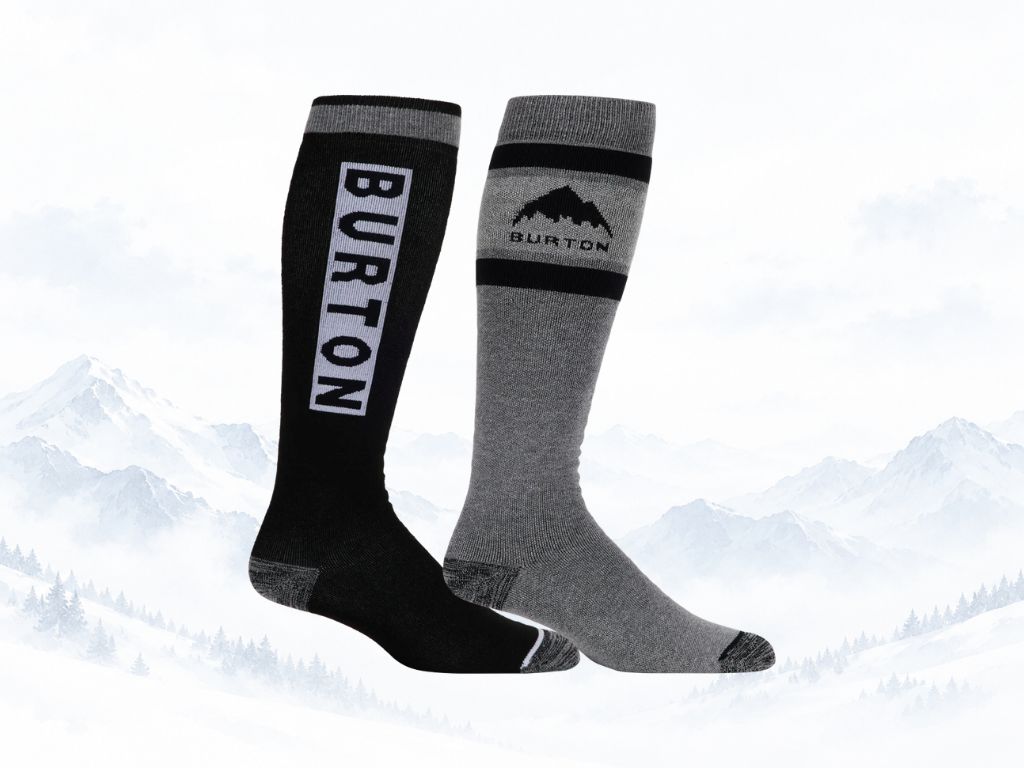
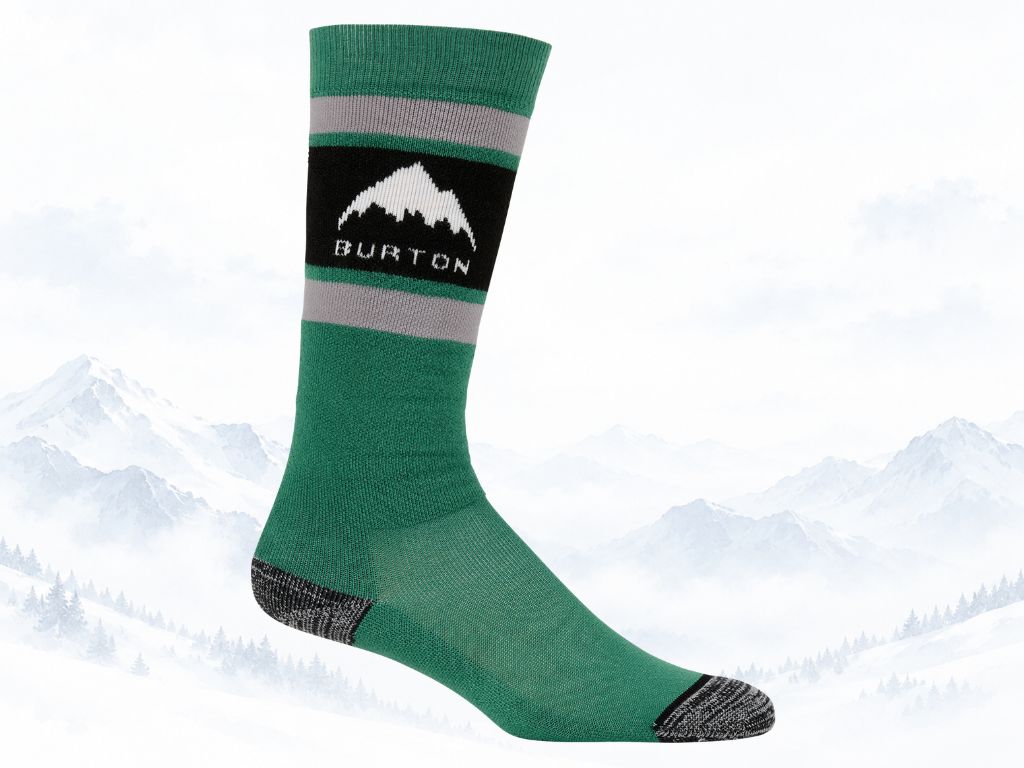
Burton Weekend Midweight Socks (2 Pack)
Pros & Cons
- Two pairs in one pack for back-to-back riding days
- Over-the-calf fit stays above snowboard boot liners
- Medium cushioning balances comfort and everyday boot fit
- Reinforced heel and toe, with elastic arch support
- Synthetic blend instead of a merino-heavy fabric
- Midweight feel may be too bulky in very tight boots
- Two-pair price costs more upfront than a single pair
Why we chose it
The Weekend Midweight two-pack takes our top spot for its practical design and value across a full weekend at the hill. Burton builds it for snowboard boots, with an over-the-calf length, medium cushioning, reinforced high-wear areas and a secure-feeling arch. Having a second clean pair is genuinely useful when you ride consecutive days. At C$54.99 for two pairs, it offers a straightforward alternative to buying two premium single pairs. It isn’t the most technical merino option here and riders with snug boots may prefer thinner socks, but its balance of features and convenience is why we’ve made it our overall pick.
Who it's for
Who it’s for: Resort snowboarders who want dependable midweight cushioning and two fresh pairs for regular winter outings.
Who it’s not for: Riders with very closely fitted boots who prefer a thinner sock or a merino-heavy blend. For a lighter-feeling alternative, compare the Rossignol Intermediate Ski Socks.
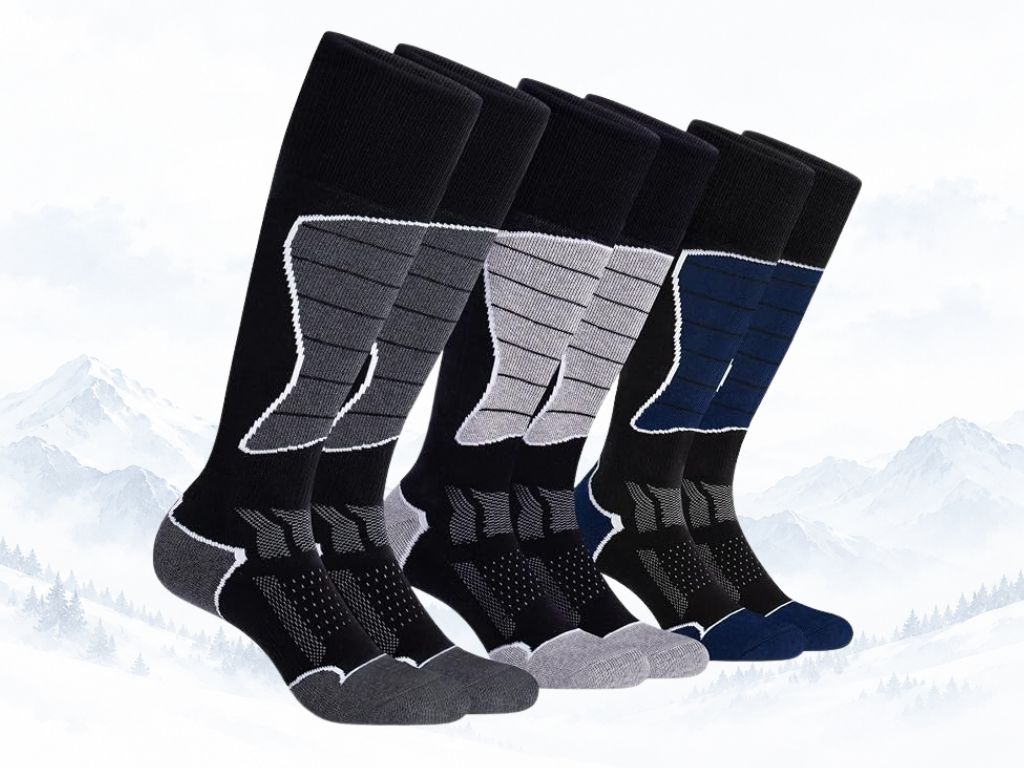
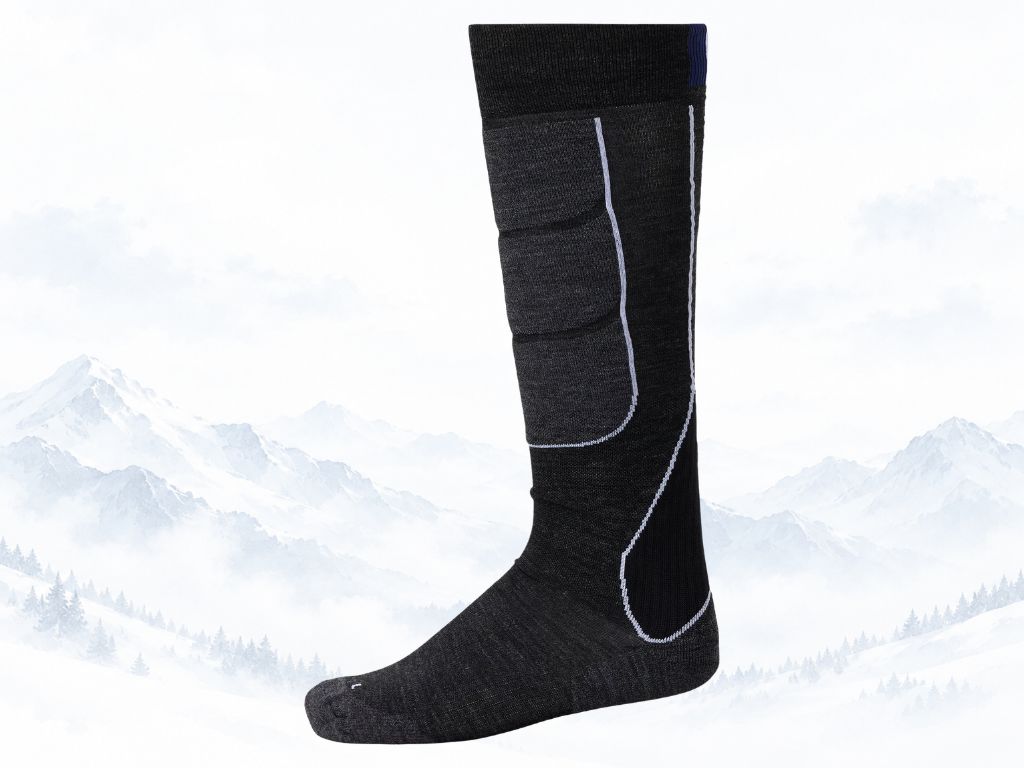
CS CELERSPORT Ski Socks
Pros & Cons
- Lower entry price than some premium ski sock options
- Made for cold-weather skiing and snowboarding
- Knee-high coverage helps protect the lower leg
- Available through Amazon.ca
- Less detailed technical information than specialist sock brands
- Exact pack count and composition may vary by selected listing option
- Not the cheapest single-pair option in this shortlist
Why we chose it
The CELERSPORT option makes the list for shoppers who would rather keep their sock budget modest. Its Amazon.ca listing markets it for skiing, snowboarding and winter sports, offering a more accessible alternative to established specialist brands. However, it doesn’t come with the same depth of verifiable fabric and fit information we could find for Burton, Smartwool or Darn Tough. At the C$39.99 price provided for this Amazon selection, check the size, materials and number of pairs before ordering; different variants can change the value considerably. We’d treat it as an affordable option to compare, not a guaranteed match for a precision-fitted boot.
Who it's for
Who it’s for: Casual skiers and snowboarders shopping on Amazon who want winter-sport socks without paying premium single-pair prices.
Who it’s not for: Riders who want clearly documented merino content, precise technical sizing or a long-term durability guarantee. Consider the Smartwool Ski Targeted Cushion instead.
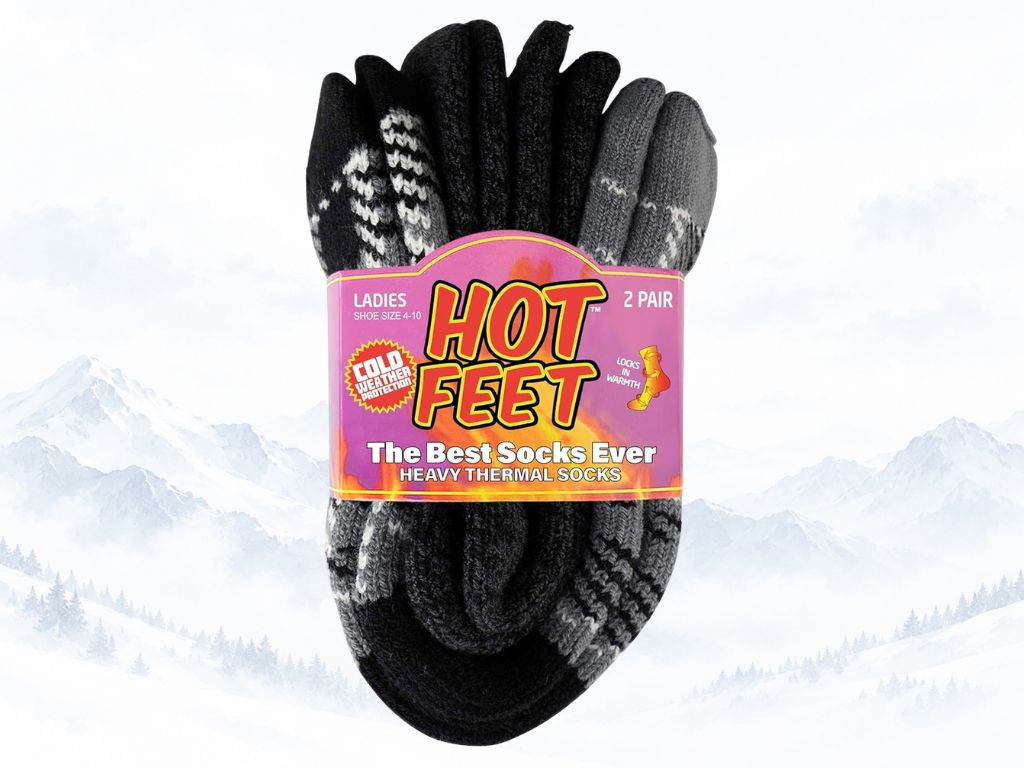
HOT FEET Women's Thermal Socks (2 Pairs)
Pros & Cons
- Warm, plush thermal construction for cold days
- Two pairs included in the selected product
- Comfortable for winter boots and après-ski wear
- Women's-oriented sizing and casual winter fit
- Crew-length design may sit below taller ski or snowboard boot cuffs
- Extra thickness can create pressure in a snug performance boot
- Less sport-specific than the over-the-calf options here
Why we chose it
These HOT FEET socks are the outlier in this guide, and that’s worth being clear about. They’re designed with everyday cold-weather comfort in mind rather than the close fit of a dedicated ski sock. The plush thermal feel can be appealing for winter walks, lounging after a day on the slopes or wearing looser winter boots. But inside a fitted ski or snowboard boot, a thick crew sock may bunch or press against the liner and can make your feet less comfortable, not more. They’re included as a warmth-first alternative, not as our preferred choice for serious on-snow performance.
Who it's for
Who it’s for: Women who want soft, warm socks for casual winter boots, cold-weather outings and time off the slopes.
Who it’s not for: Skiers or snowboarders wearing closely fitted, over-the-calf performance boots. Choose the Burton Women’s Performance Midweight Socks for a purpose-built boot sock.
Rossignol Men's Intermediate Ski Socks
Pros & Cons
- Light cushioning reduces unnecessary bulk inside ski boots
- 31% merino wool blend helps manage moisture and odour
- Anatomical left/right fit with shin protection
- Knee-high design suits tall ski boot cuffs
- Less cushioning for riders who want a plush sock
- Men's sizing and fit range may not suit everyone
- One pair at this price rather than a multipack
Why we chose it
The Rossignol Intermediate Ski Socks are a sensible choice for skiers who want a cleaner, less bulky fit inside stiff boots. Their light cushioning, knee-high height and anatomical left/right design are useful features for days spent in alpine ski boots, where extra fabric can create uncomfortable pressure. Rossignol lists a blend that includes 31% merino wool, plus targeted shin protection. They’re also the least expensive listed option in this Top 8 at C$29.99. If your boots are already fitted tightly, we’d generally prefer this more restrained construction over a thick thermal sock.
Who it's for
Who it’s for: Intermediate recreational skiers who prefer light cushioning, knee-high coverage and a closer boot fit.
Who it’s not for: Riders seeking a very plush, heavily cushioned sock, or people buying specifically for children’s feet. For fuller cushioning, see the Darn Tough Snowpack.
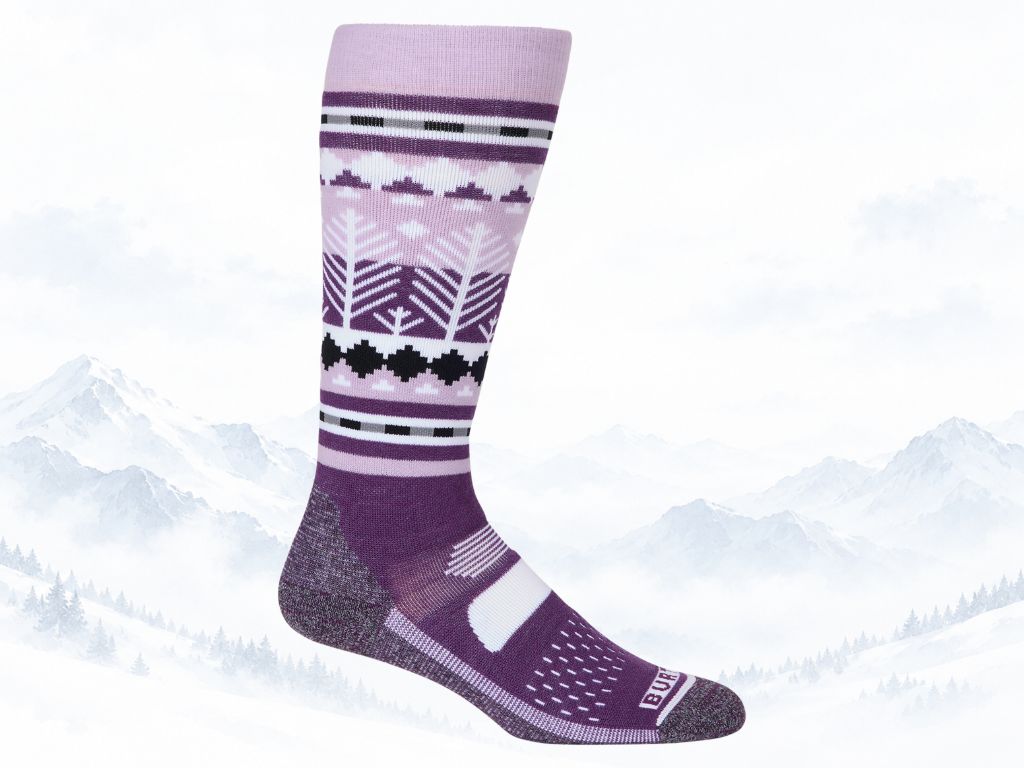
Burton Women's Performance Midweight Socks
Pros & Cons
- Merino blend helps manage moisture and odour
- Over-the-calf length is appropriate for snowboard boots
- Medium-density cushioning plus elastic support
- Smooth toe seam reduces a common friction point
- More expensive per pair than some multipacks
- Midweight thickness may not suit very tight boots
- Limited value if you only need casual winter socks
Why we chose it
Burton’s women’s Performance Midweight pair gives riders a more technical option than a basic thermal sock. Its merino blend, over-the-calf height, elastic support and medium-density cushioning are all practical details for snowboard boots. Burton also lists a smooth toe seam and reinforced footbed, which are worth considering if your liner tends to rub. This isn’t a claim that a women’s-specific sock fits everyone better; it’s simply a well-documented choice in women’s sizes, with the performance features most riders should look for. At C$44.99 for one pair, the trade-off is price versus a more general multipack.
Who it's for
Who it’s for: Women looking for a dedicated ski or snowboard sock with merino-blend comfort and structured midweight support.
Who it’s not for: Shoppers who mainly want two affordable pairs, or those with boots that need very thin socks. Compare the Burton Weekend two-pack if quantity matters more.
Burton Kids' Weekend Midweight Socks (2 Pack)
Pros & Cons
- Two pairs are useful for ski school and weekend trips
- Youth-specific size ranges for smaller feet
- Over-the-calf fit and medium-density cushioning
- Reinforced toe and heel with elastic arch support
- Children can outgrow the sizing quickly
- Midweight construction may feel thick in some boots
- Fit still needs checking against the child's boots and sock size
Why we chose it
Kids benefit from socks that stay in place, fit their boots and are easy to replace when a pair gets wet. Burton’s youth Weekend Midweight two-pack meets those practical needs with youth sizing, over-the-calf length, medium cushioning and reinforced high-wear areas. Two pairs also make packing for a weekend simpler. The most important thing is still sizing: a sock that’s too big can wrinkle underfoot, while a thick sock in a tight boot can create cold spots and discomfort. We like the purpose-built design, but would always check the boot fit before buying multiple packs.
Who it's for
Who it’s for: Families buying socks for children in ski or snowboard lessons, weekend trips and regular resort days.
Who it’s not for: Older teens or adults who have outgrown Burton’s kids’ size chart. Consider the adult Burton Weekend Midweight two-pack.
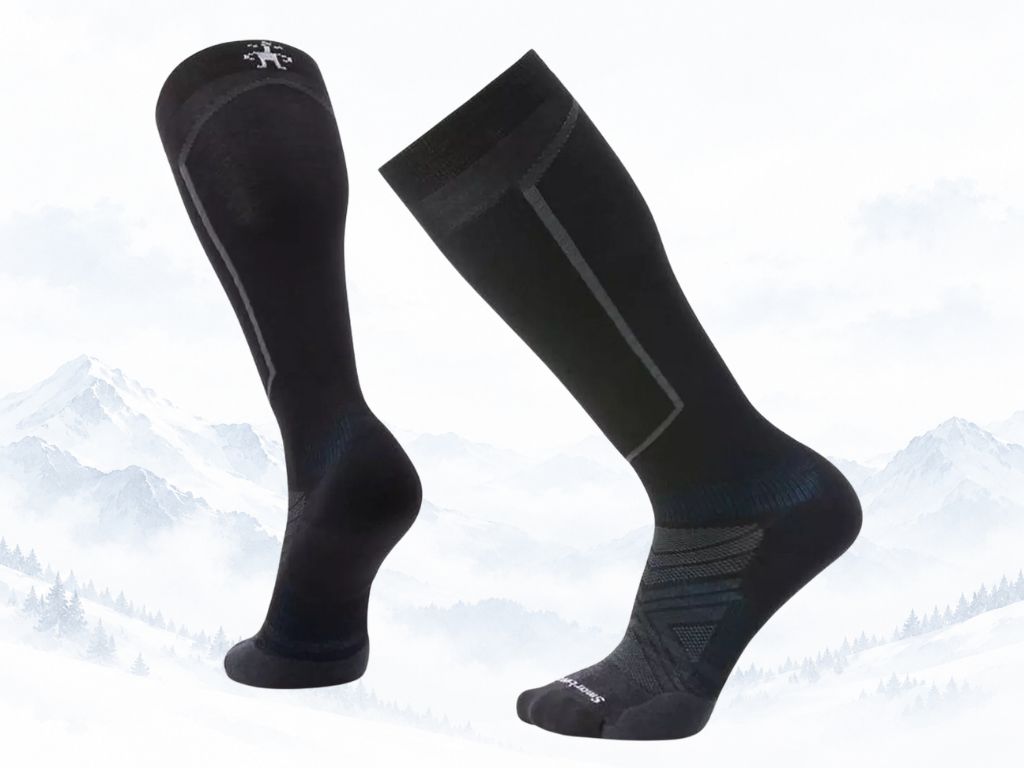
Smartwool Ski Targeted Cushion Over-the-Calf Socks
Pros & Cons
- 57% merino wool blend offers natural moisture management
- Targeted cushioning avoids padding every part of the sock
- Body-mapped mesh zones support breathability
- Supportive four-point fit system and reinforced high-wear areas
- Only one pair per purchase
- More expensive per pair than some budget bundles
- Targeted rather than full cushioning may feel sparse to some
Why we chose it
Smartwool earns the merino award because the fabric blend and construction are unusually well documented. Sporting Life lists 57% merino wool, targeted cushioning and mesh ventilation zones, alongside Smartwool’s four-point fit system. That combination is compelling for skiers and snowboarders who want warmth and moisture management without simply choosing the thickest sock available. It also offers a clearer materials story than many lower-cost marketplace listings. It’s a single pair for C$40, so a full week’s supply adds up, but the design makes a strong case for people who prioritize boot comfort and fit.
Who it's for
Who it’s for: Skiers and snowboarders who want a merino-rich over-the-calf sock with targeted cushioning and breathability.
Who it’s not for: Shoppers who need several inexpensive pairs at once or prefer maximum padding everywhere. For a cushioned alternative, see the Darn Tough Snowpack.
Frequently asked questions
Are ski socks and snowboard socks the same?
Most ski and snowboard socks share the important features: moisture management, a close fit, and enough height to sit above the boot cuff. Some snowboard socks use different cushioning patterns around the shin and foot, but fit matters more than the label. A properly sized ski sock can work in snowboard boots and vice versa, provided it doesn’t bunch or create pressure.
Should ski and snowboard socks be thick or thin?
Choose the thickness that works with your boot fit. Extra-thick socks aren’t automatically warmer: if they make a boot too tight, they can restrict circulation and leave your feet feeling colder. Thin or lightly cushioned socks often suit closely fitted ski boots, while midweight socks can be comfortable in roomier snowboard boots. Try them on with your actual boots before committing.
Are merino wool socks better for skiing and snowboarding?
Merino wool is popular because it can help manage moisture and odour while staying comfortable across changing temperatures. A merino blend isn’t automatically better than a well-made synthetic sock, though. Construction, fit, cushioning and drying time all matter. Look for a blend that feels good inside your boots rather than choosing solely by wool percentage.
How many pairs of ski socks do I need?
Plan on one clean, dry pair for each day on the slopes. For a two-day trip, a two-pack is convenient. Avoid layering two pairs inside fitted ski or snowboard boots, since the extra bulk and friction can make your feet less comfortable. If your socks get damp during the day, a spare dry pair can be useful.
Can I wear regular thermal socks in ski or snowboard boots?
You can, but regular thermal socks may be too thick or too short for some performance boots. Crew socks can end beneath a tall boot cuff, and bulky material can wrinkle or create pressure points. An over-the-calf sock designed for skiing or snowboarding is usually the safer bet for a snug boot fit. Save plush thermal socks for looser winter boots and après-ski comfort.

About the author
Winter Equipment & Gear Review Team
Snowstorms is a Canadian resource dedicated to helping consumers find the right seasonal equipment and sporting gear. Through detailed product reviews, comparisons, and buying guides, Snowstorms helps readers make informed purchasing decisions and find equipment that suits their needs and budget.