
At a Glance
- Alert level: Orange; Be Prepared.1
- Issued by: Environment and Climate Change Canada (ECCC) through the Meteorological Service of Canada (MSC).2
- Purpose: Warns of dangerous snow squalls that are expected to create significant travel hazards and widespread visibility reductions.3
- Primary hazards: Heavy snowfall, blowing snow, frequent whiteout conditions, slippery roads, and dangerous highway travel.4
- Travel impact: Travel may become hazardous, particularly on highways and exposed roads. Consider postponing unnecessary trips.5
- Recommended action: Delay unnecessary travel, monitor weather updates, and prepare for rapidly changing road conditions.6
- Related alerts: Snow Squall Warning, Yellow Snow Squall Warning, Snowfall Warning, Blizzard Warning.7
Orange Warning – Snow Squall Meaning?
An Orange Snow Squall Warning indicates a high likelihood of dangerous travel conditions caused by intense snow squalls. Heavy bursts of snow, strong wind gusts, and widespread reductions in visibility are expected to create hazardous driving conditions, particularly on highways and exposed rural roads.8
An orange warning represents a greater level of concern than a Yellow Snow Squall Warning. While not every location within the warned area will experience the same severity, motorists should expect conditions to deteriorate quickly and be prepared to alter or postpone travel plans if necessary.9
Snow squalls are highly localized and can develop rapidly. Drivers may encounter clear skies one moment and near-whiteout conditions the next, making Orange Snow Squall Warnings especially important for anyone planning to travel during the winter months.10
When Is an Orange Snow Squall Warning Issued?
An Orange Snow Squall Warning is issued when meteorologists expect snow squalls capable of producing significant travel impacts across portions of the warned area. Forecast models, weather radar, satellite imagery, and real-time observations are used to determine when conditions are likely to create dangerous visibility reductions and rapidly deteriorating road conditions.11 12
Unlike a yellow-level warning, an Orange Snow Squall Warning indicates a greater confidence that hazardous conditions will develop and that travel may become dangerous. Motorists are encouraged to delay unnecessary trips until the snow squall has passed and road conditions improve.
What to Expect During an Orange Snow Squall Warning?
An Orange Snow Squall Warning means hazardous winter driving conditions are likely. Even though snow squalls are often brief, they can create conditions severe enough to disrupt travel and increase the risk of highway collisions.
Frequent Whiteout Conditions
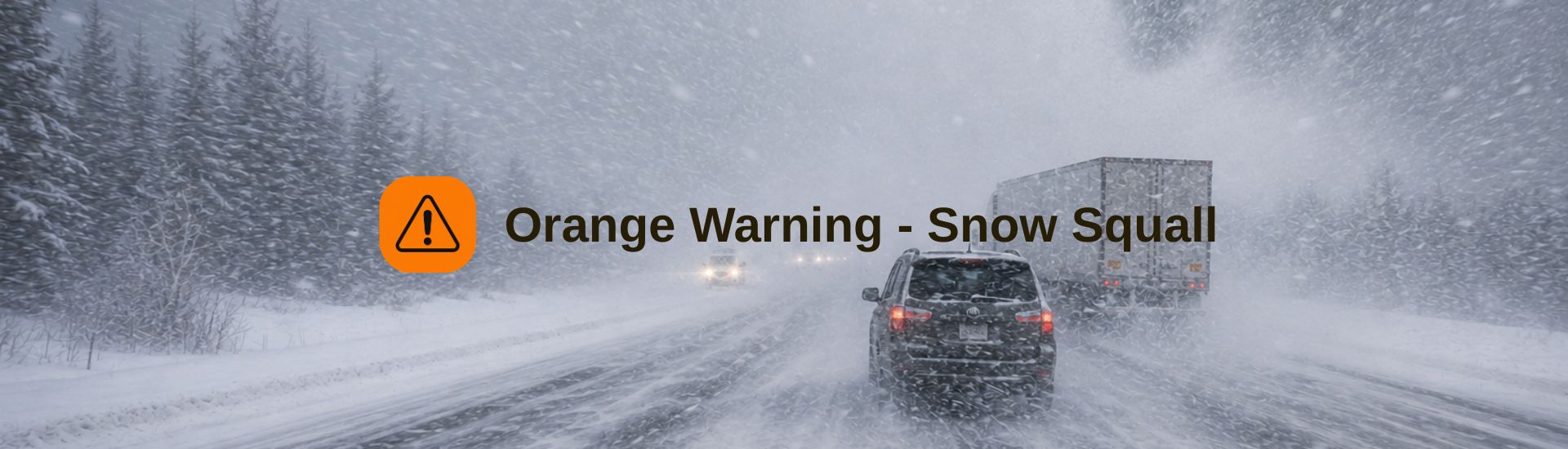
Heavy snowfall combined with blowing snow may reduce visibility to near zero with little warning. Drivers may be unable to see lane markings, traffic signs, or vehicles ahead until they are dangerously close.
Heavy Snowfall and Blowing Snow
Snowfall rates may be intense enough to quickly cover roads, while strong wind gusts continue blowing snow across highways after the heaviest snowfall has ended.
Dangerous Road Conditions
Roads may become snow-covered and slippery within minutes. Reduced traction, hidden black ice, and drifting snow can make stopping and steering significantly more difficult.
Major Travel Disruptions
Traffic slowdowns, highway closures, vehicle collisions, and extended travel delays become much more likely during an Orange Snow Squall Warning. Conditions can change rapidly over short distances, catching motorists off guard.
How Dangerous Is an Orange Snow Squall Warning?
An Orange Snow Squall Warning should be taken seriously. While snow squalls typically affect smaller areas than winter storms, their sudden onset and severe reduction in visibility make them one of the most dangerous winter weather hazards for drivers.
Most serious collisions during snow squalls occur because motorists continue travelling at highway speeds despite rapidly deteriorating visibility. Once visibility drops to near zero, drivers have very little time to react to slowing traffic or obstacles ahead.
Because weather conditions can change within minutes, delaying travel until the warning expires is often the safest option.
What Should You Do During an Orange Snow Squall Warning?
If an Orange Snow Squall Warning has been issued, avoid unnecessary travel whenever possible. Waiting until conditions improve can significantly reduce your risk of becoming involved in a collision.
Delay Unnecessary Travel
If your trip is not essential, consider postponing it until the warning has ended and roads have been cleared.
Drive Only If Necessary
If travel cannot be avoided, reduce your speed, increase your following distance, keep your headlights on, and avoid sudden braking or steering movements.
Prepare for Emergencies
Carry a winter emergency kit that includes blankets, food, water, a flashlight, a fully charged phone or power bank, warm clothing, and a snow shovel. Becoming stranded is uncommon but possible during severe snow squalls.
Monitor Weather and Road Conditions
Continue checking Environment and Climate Change Canada forecasts and provincial road condition services throughout your trip. Conditions may improve quickly after a snow squall passes, but additional snow squalls may follow.
Orange Snow Squall Warning vs. Yellow Snow Squall Warning
| Orange Snow Squall Warning | Yellow Snow Squall Warning |
|---|---|
| High travel risk | Low to moderate travel risk |
| Frequent whiteout conditions | Localized visibility reductions |
| Delay unnecessary travel | Travel with increased caution |
| Significant travel disruptions possible | Minor travel disruptions expected |
| Greater confidence in hazardous conditions | Conditions may become hazardous |
A Yellow Snow Squall Warning encourages drivers to remain alert and prepare for deteriorating weather conditions. An Orange Snow Squall Warning indicates that hazardous travel is much more likely, and postponing unnecessary travel is often the safest course of action.
Frequently Asked Questions
An Orange Snow Squall Warning indicates that dangerous snow squalls are expected to create significant travel hazards, including heavy snowfall, blowing snow, and frequent whiteout conditions.
Avoid unnecessary travel whenever possible. If you must drive, reduce your speed, leave extra following distance, and be prepared for sudden visibility reductions.
Most snow squalls last between 15 and 60 minutes, although multiple snow squalls may affect the same area over several hours.
Yes. If conditions continue to worsen or additional hazards develop, weather authorities may issue updated warnings or other winter weather alerts.
They are most common during the winter months in regions affected by lake-effect snow, particularly southern Ontario, but can also occur elsewhere in Canada when atmospheric conditions are favourable.
An Orange Snow Squall Warning covers localized, short-duration events with rapidly changing visibility. A Blizzard Warning is issued for widespread severe winter weather with prolonged strong winds and reduced visibility lasting several hours.
- https://www.canada.ca/en/services/environment/weather/severeweather/weather-alerts/colour-coded-alerts.html ↩︎
- https://www.canada.ca/en/services/environment/weather/severeweather/weather-alerts.html ↩︎
- https://www.canada.ca/en/environment-climate-change.html ↩︎
- https://www.canada.ca/en/services/environment/weather/severeweather/weather-alerts/weather-impact-guides.html ↩︎
- https://www.weather.gov/safety/winter-snow-squall ↩︎
- https://www.canada.ca/en/environment-climate-change/services/seasonal-weather-hazards/severe-winter.html ↩︎
- https://avmet.navcanada.ca/en/snow-squall.aspx ↩︎
- https://www.canada.ca/en/services/environment/weather/severeweather/weather-alerts/colour-coded-alerts.html ↩︎
- https://www.canada.ca/en/services/environment/weather/severeweather/weather-alerts.html ↩︎
- https://www.canada.ca/en/environment-climate-change.html ↩︎
- https://www.canada.ca/en/environment-climate-change/services/weather-general-tools-resources/weathercan.html ↩︎
- https://www.canada.ca/en/services/environment/weather/severeweather/weather-alerts/choose-alert-colours.html#safety ↩︎