
What Does an Orange Air Quality Warning Mean?
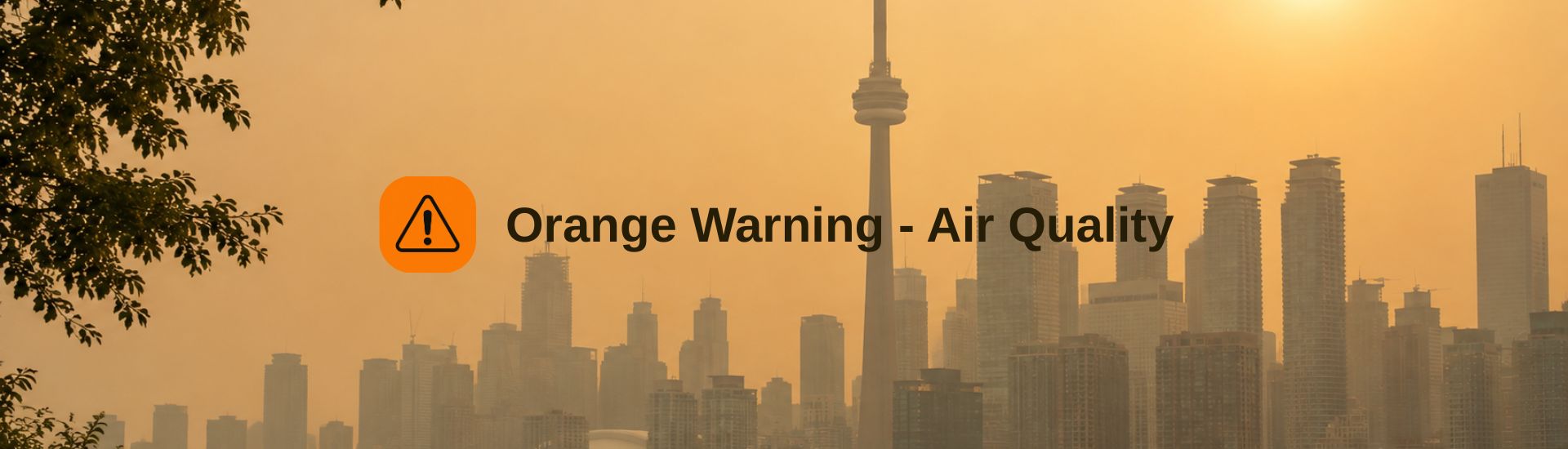
An orange air quality warning signals that air pollution has become high enough to pose a greater health risk, not only for vulnerable individuals but also for many healthy people during prolonged outdoor exposure. This generally corresponds to an Air Quality Health Index (AQHI) of 10 or higher, where stronger health precautions are recommended.
At this level, wildfire smoke or other pollutants are often dense enough to noticeably reduce air quality and may cause symptoms such as coughing, sore throat, headaches, eye irritation, chest discomfort, or shortness of breath, even in people without existing medical conditions.
Sensitive individuals should avoid unnecessary outdoor activity whenever possible, while everyone else should consider limiting strenuous exercise outdoors until air quality improves. Keeping windows and doors closed, using air filtration if available, and following local public health guidance can help reduce exposure.
An orange air quality warning indicates that conditions have become significantly more hazardous than a lower-level warning. Staying informed and taking protective measures can help reduce the short-term health effects associated with poor air quality.
Air Quality Warning Levels Explained
| Yellow Warning – Air Quality | AQHI of 7–9 | Risk: Moderate–High |
| Orange Warning – Air Quality | AQHI of 10+ | Risk: High |
Who Is Most at Risk During an Orange Air Quality Warning?
An orange air quality warning represents a much greater health concern because pollution levels are high enough to affect a broader portion of the population. Sensitive individuals remain at the greatest risk, but even healthy people may begin experiencing symptoms after prolonged exposure outdoors.
Those at the highest risk include:
- Children, whose developing lungs are especially vulnerable to airborne pollutants.
- Older adults.
- People with asthma, COPD, emphysema, or other respiratory illnesses.
- Individuals with heart disease or other cardiovascular conditions.
- Pregnant individuals.
- Outdoor workers, emergency responders, and anyone required to spend extended periods outside.
During an orange warning, symptoms such as persistent coughing, chest tightness, burning eyes, headaches, wheezing, and shortness of breath become more common. People with existing medical conditions may also experience worsening symptoms that require medication adjustments or medical attention.
Even if you are healthy, it is advisable to reduce strenuous outdoor activity during an orange air quality warning, particularly if wildfire smoke is visible or you begin to experience any signs of irritation. Taking precautions early can significantly reduce your exposure until air quality improves.
What Causes an Orange Air Quality Warning?
An orange air quality warning is issued when pollution levels become significantly higher and pose a greater health risk to both vulnerable individuals and the general public. These warnings often occur during large-scale pollution events that affect entire regions.
Common causes include:
- Heavy wildfire smoke, which is the leading cause of orange air quality warnings across Canada.
- Persistent high concentrations of fine particulate matter (PM2.5) suspended in the air.
- Elevated ground-level ozone during prolonged periods of hot, sunny weather.
- Industrial and transportation emissions that accumulate when atmospheric conditions prevent pollutants from dispersing.
- Temperature inversions and stagnant air, which trap smoke and pollution close to the ground for extended periods.
Orange warnings typically develop when pollution remains elevated for several hours or days, allowing contaminants to build to unhealthy levels. Because conditions can change quickly with shifting winds, rainfall, or changes in wildfire activity, it’s important to continue monitoring AQHI forecasts and official weather alerts until the warning is lifted.
Orange Warning Air Quality FAQs
An orange air quality warning indicates that pollution levels are high enough to pose a greater health risk. Sensitive individuals should avoid unnecessary outdoor exposure, and even healthy people may experience symptoms after spending extended periods outside.
Brief trips outdoors are generally acceptable for most healthy people, but prolonged or strenuous outdoor activity should be avoided. People in higher-risk groups should stay indoors whenever practical until air quality improves.
Orange warnings are most often caused by heavy wildfire smoke, although high concentrations of fine particulate matter, ozone, and stagnant weather conditions can also contribute.
Yes. Unlike lower-level warnings, an orange air quality warning can affect healthy individuals, particularly during prolonged outdoor activity. Symptoms may include coughing, eye irritation, headaches, sore throat, and shortness of breath.
If smoke or poor air quality is affecting your area, keeping windows and doors closed can help reduce the amount of polluted air entering your home. Using an air purifier with a HEPA filter can further improve indoor air quality.
Monitor updates from your local weather agency and the Air Quality Health Index (AQHI). Once pollution levels decrease and the warning is lifted, normal outdoor activities can generally be resumed.