
At a Glance
- Alert level: Yellow; Be Aware.1
- Issued by: Environment and Climate Change Canada (ECCC) through the Meteorological Service of Canada (MSC).2
- Purpose: Alerts the public to localized snow squalls that may create hazardous travel conditions and reduced visibility.3
- Primary hazards: Heavy bursts of snow, blowing snow, reduced visibility, and slippery roads.4
- Travel impact: Conditions may become hazardous, especially on highways and exposed roads.5
- Recommended action: Slow down, monitor weather updates, and consider delaying unnecessary travel if conditions begin to deteriorate.6
- Related alerts: Snow Squall Warning, Orange Snow Squall Warning, Snowfall Warning, Blizzard Warning.7
Yellow Warning – Snow Squall Meaning?
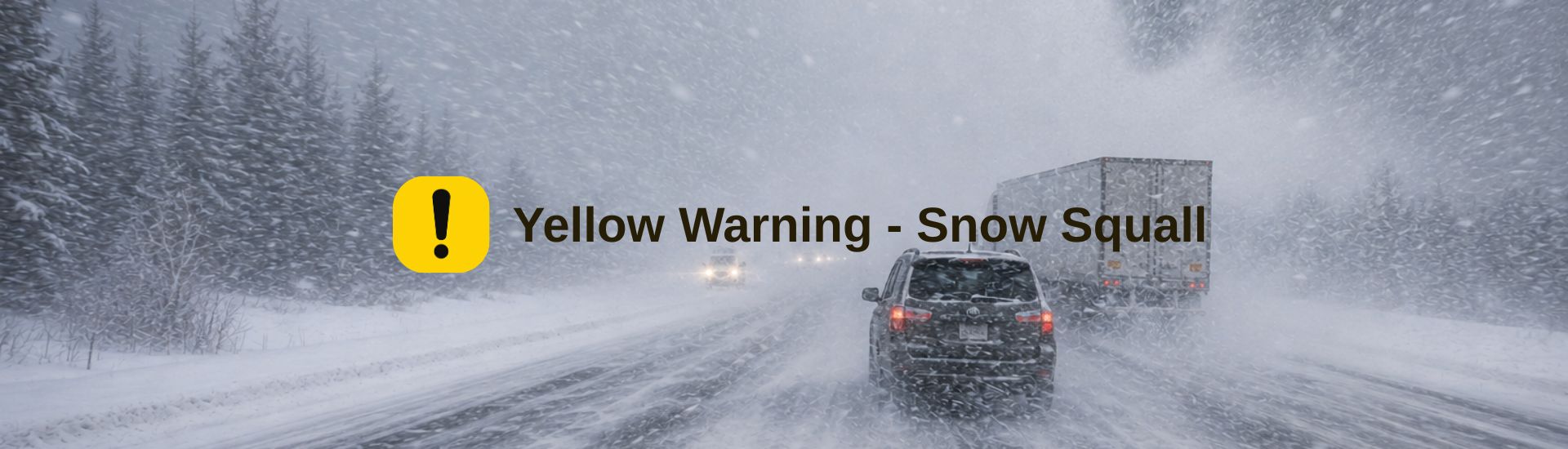
A Yellow Snow Squall Warning indicates that weather conditions are favourable for localized snow squalls capable of reducing visibility and creating hazardous travel conditions. While impacts are generally less severe than an Orange Snow Squall Warning, drivers should still be prepared for rapidly changing weather, particularly along highways and open rural roads.8
A yellow warning serves as an early indication that winter driving conditions may become dangerous. Heavy bursts of snow, blowing snow, and slippery roads can develop quickly, making travel more difficult than normal. Although widespread disruption is not expected, motorists should remain alert and adjust their driving to match current road conditions.9
Not every community within the warned area will experience the same conditions. Snow squalls are highly localized, meaning one location may receive heavy snowfall while another a few kilometres away remains largely unaffected. Because of this, it’s important to monitor forecasts and road conditions if you plan to travel.10
When Is a Yellow Snow Squall Warning Issued?
A Yellow Snow Squall Warning is issued when meteorologists expect snow squalls capable of creating localized travel hazards, but where the overall impacts are expected to remain limited or short-lived. Forecasters evaluate weather models, radar data, satellite imagery, and real-time observations before issuing the alert.11 12
Although the warning represents the lowest level of concern in the colour-coded alert system, it should not be ignored. Even relatively brief snow squalls can reduce visibility, create slippery road conditions, and increase the risk of vehicle collisions, especially during busy travel periods.13
What Should You Expect During a Yellow Snow Squall Warning?
A Yellow Snow Squall Warning means travel conditions may deteriorate quickly in localized areas. While widespread disruption is not expected, motorists should be prepared for changing weather conditions that could make driving more difficult, particularly on highways and exposed rural roads.
Reduced Visibility
Visibility may decrease rapidly as heavy snow and blowing snow move through the warned area. Although whiteout conditions are generally less widespread than during higher-level alerts, visibility can still become poor enough to make driving hazardous.
Snow-Covered Roads
Short periods of heavy snowfall can quickly cover road surfaces, reducing traction and increasing stopping distances. Untreated roads, bridges, and overpasses are often the first locations to become slippery.
Strong Wind Gusts
Many snow squalls are accompanied by gusty winds that blow falling and freshly accumulated snow across roadways. Even after snowfall begins to ease, blowing snow can continue reducing visibility in open areas.
Localized Travel Disruptions
Most Yellow Snow Squall Warnings affect relatively small areas rather than entire regions. As a result, weather conditions may vary significantly over short distances, with some communities experiencing heavy snowfall while nearby locations remain largely unaffected.
How Dangerous Is a Yellow Snow Squall Warning?
A Yellow Snow Squall Warning represents the lowest level of concern within the colour-coded alert system, but it should not be considered harmless. Even lower-level snow squalls can create dangerous driving conditions, especially for motorists travelling at highway speeds.
Most incidents associated with yellow-level conditions occur because drivers fail to reduce their speed or underestimate how quickly visibility and road conditions can change.
Although major disruptions are less likely than during an Orange Snow Squall Warning, extra caution is still recommended whenever a warning has been issued.
Yellow vs. Orange Snow Squall Warning
Both warning levels indicate that hazardous snow squalls are expected or occurring, but the anticipated impacts are different.
| Yellow Snow Squall Warning | Orange Snow Squall Warning |
|---|---|
| Low to moderate travel impacts | Significant travel impacts |
| Localized visibility reductions | Frequent or widespread whiteout conditions |
| Travel with increased caution | Delay unnecessary travel if possible |
| Brief hazardous conditions | More severe and prolonged hazardous conditions |
| Minor travel disruptions expected | Major travel disruptions possible |
A Yellow Snow Squall Warning is intended to increase awareness and encourage drivers to prepare for deteriorating weather conditions. An Orange Snow Squall Warning indicates a greater likelihood of dangerous travel conditions where postponing unnecessary trips may be the safest option.
Frequently Asked Questions
A yellow snow squall warning means intense, localized snowfall may cause moderate, localized or short-term impacts.
Snow squalls can cause sudden reductions in visibility and rapidly changing road conditions, making them particularly hazardous for drivers.
Driving may be dangerous because conditions can change suddenly. Check current weather and road conditions and consider delaying unnecessary travel.
Snow squalls may be relatively brief, but the duration of a warning depends on how long hazardous conditions are expected to affect the area.
Reduce your speed, increase following distance, remain alert for rapidly changing visibility and follow any road closures or official guidance.
Yes. The warning may be upgraded if more significant or widespread impacts are expected.
Sources
- https://www.canada.ca/en/services/environment/weather/severeweather/weather-alerts/colour-coded-alerts.html ↩︎
- https://www.canada.ca/en/services/environment/weather/severeweather/weather-alerts.html ↩︎
- https://www.canada.ca/en/environment-climate-change.html ↩︎
- https://www.canada.ca/en/services/environment/weather/severeweather/weather-alerts/weather-impact-guides.html#toc9 ↩︎
- https://www.weather.gov/safety/winter-snow-squall ↩︎
- https://www.canada.ca/en/environment-climate-change/services/seasonal-weather-hazards/severe-winter.html ↩︎
- https://avmet.navcanada.ca/en/snow-squall.aspx ↩︎
- https://www.canada.ca/en/services/environment/weather/severeweather/weather-alerts/colour-coded-alerts.html ↩︎
- https://www.canada.ca/en/services/environment/weather/severeweather/weather-alerts.html ↩︎
- https://weather.gc.ca/ ↩︎
- https://www.canada.ca/en/services/environment/weather/severeweather/weather-alerts/weather-impact-guides.html ↩︎
- https://www.canada.ca/en/environment-climate-change/services/weather-general-tools-resources/weathercan.html ↩︎
- https://www.weather.gov/safety/winter-snow-squall ↩︎