Rainfall Warning
A Rainfall Warning is issued when significant rainfall is expected to create hazardous conditions, including flooding, water accumulation and difficult travel.

A Rainfall Warning is issued when significant rainfall is expected to create hazardous conditions, including flooding, water accumulation and difficult travel.
A Freezing Rain Warning is issued when freezing rain is expected to create hazardous ice accumulation on roads, sidewalks, trees, power lines and other surfaces.
An Extreme Cold Warning alerts you when extremely cold temperatures or very low wind chill values are expected to create dangerous conditions.
A Heat Warning is issued when temperatures or Humidex values are forecast to reach regional thresholds associated with increased health risks, typically for at least two days.
A Blizzard Warning is issued when strong winds and snow or blowing snow are expected to cause widespread visibility of 400 metres or less.
An Air Quality Warning is issued when wildfire smoke or other pollutants cause air quality to reach levels that may pose a risk to human health. Learn what triggers an Air Quality Warning in Canada, how the Air Quality Health Index (AQHI) is used, and what steps you can take to reduce your exposure.
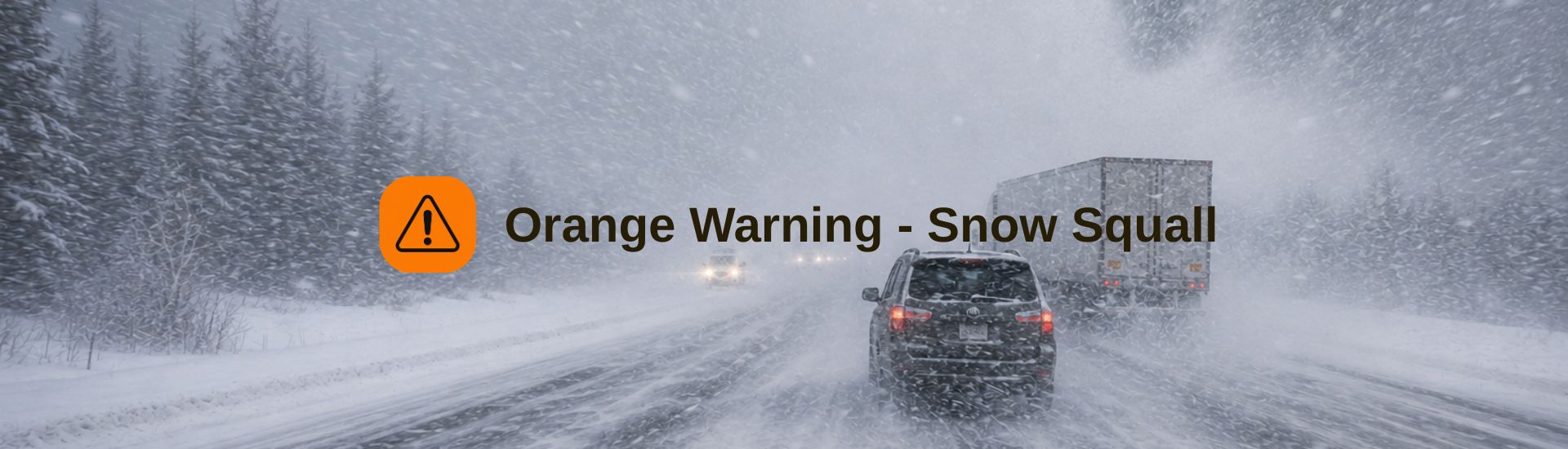
An Orange Snow Squall Warning signals a high likelihood of dangerous travel conditions due to intense snowfall, strong winds, and widespread visibility reductions. Travel may become hazardous, particularly on highways and exposed roads, and motorists should delay unnecessary trips if possible.
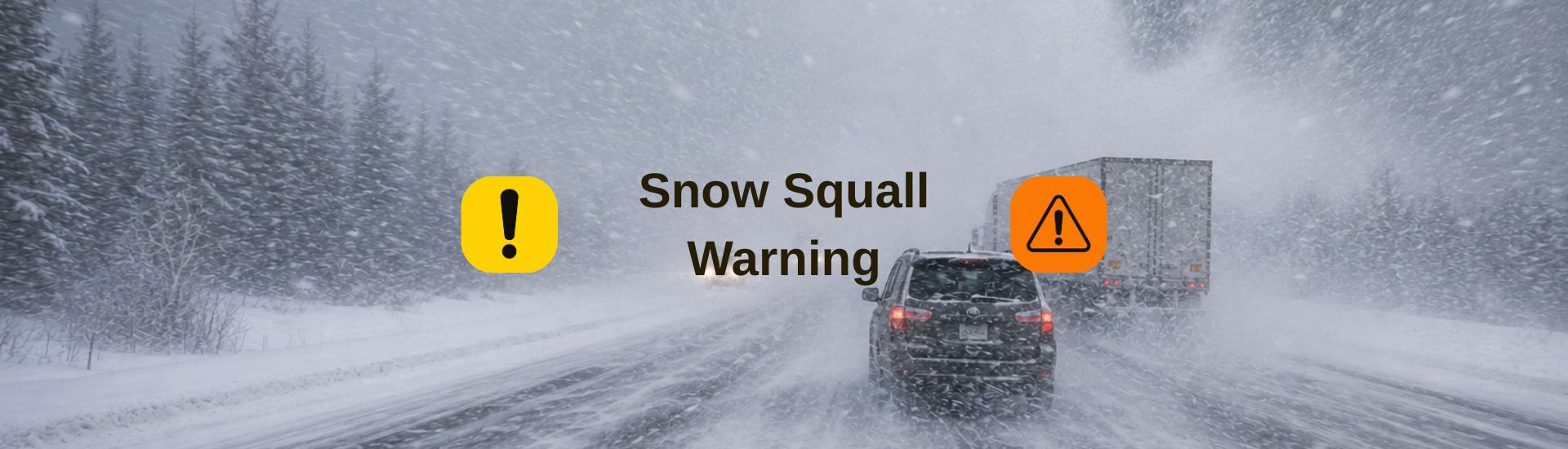
A Snow Squall Warning is issued when intense bursts of snow, strong wind gusts, and sudden whiteout conditions are expected or occurring. Snow squalls can rapidly reduce visibility to near zero and create dangerous travel conditions, even though they typically last less than an hour.
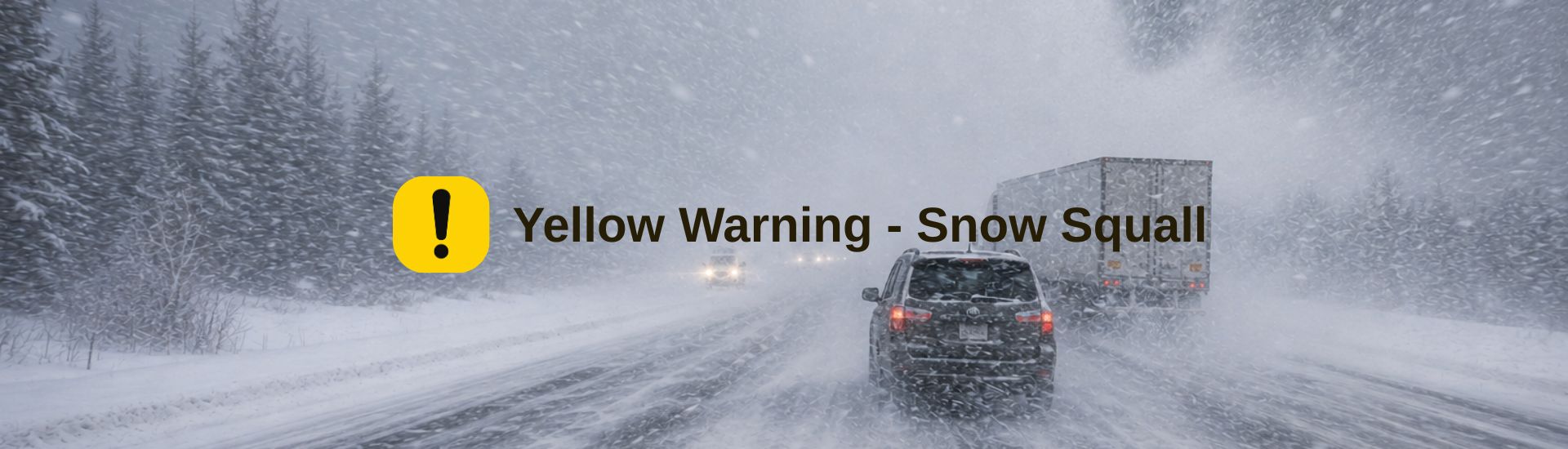
A Yellow Snow Squall Warning indicates a low to moderate risk of hazardous travel caused by brief periods of heavy snowfall, blowing snow, or reduced visibility. While impacts are generally localized, drivers should be prepared for rapidly changing road conditions.
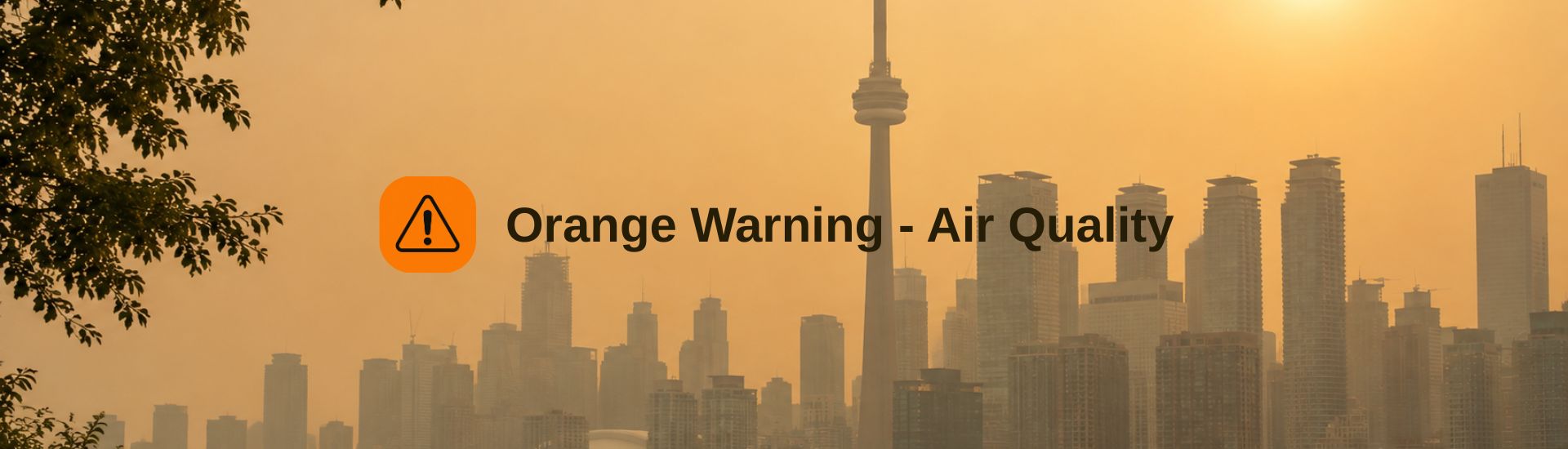
An orange Air Quality Warning indicates a high health risk, generally corresponding to an AQHI rating of 7 to 9. During these conditions, everyone should consider reducing prolonged outdoor exertion, while those at higher risk should limit their exposure and follow public health guidance.