The Best Snowboard Boots of 2027
Comfort, fit, and support are essential when choosing snowboard boots. We’ve narrowed down the best snowboard boots of 2027 to three standout options, comparing their features, performance, and value to help you find the right fit for your next season on the mountain.

- Last updated:
Explore:
Snowstorms is reader supported. When you buy through our links we may earn a commission. Learn more
A quick look at our top picks
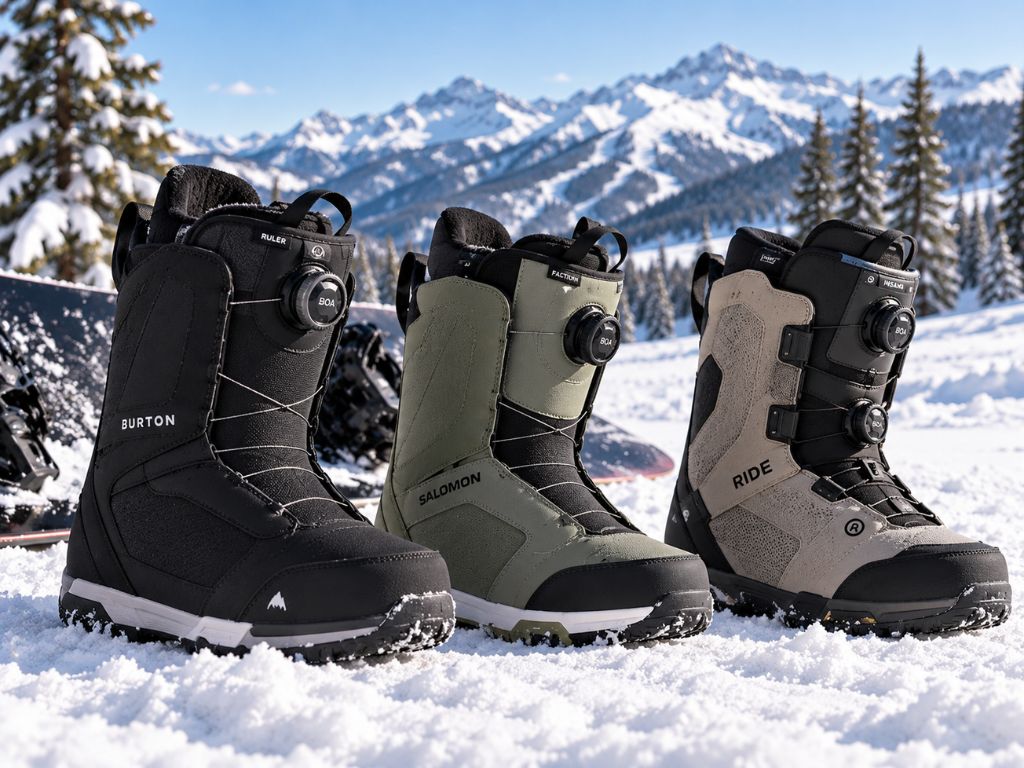
We’ve selected three snowboard boots that stand out for different types of riders. Whether you’re looking for a comfortable all-mountain boot, an affordable option for getting started, or a stiff, responsive boot for aggressive riding, here’s a quick look at our top picks for 2027.
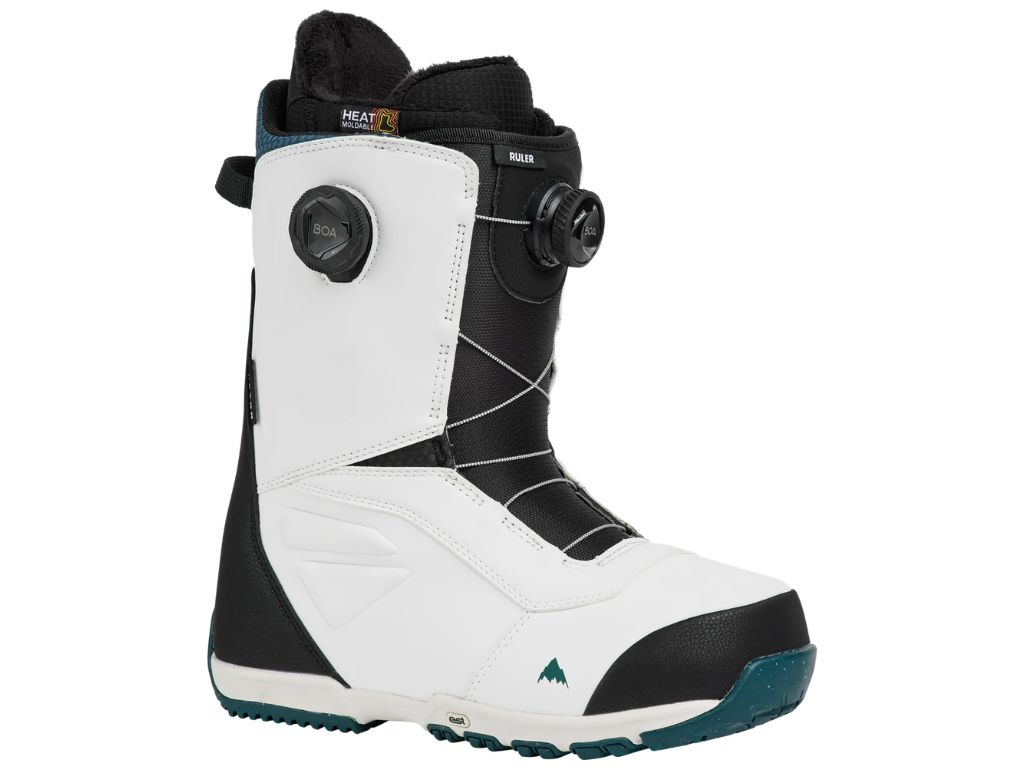
Burton Ruler BOA Snowboard Boots (2027)
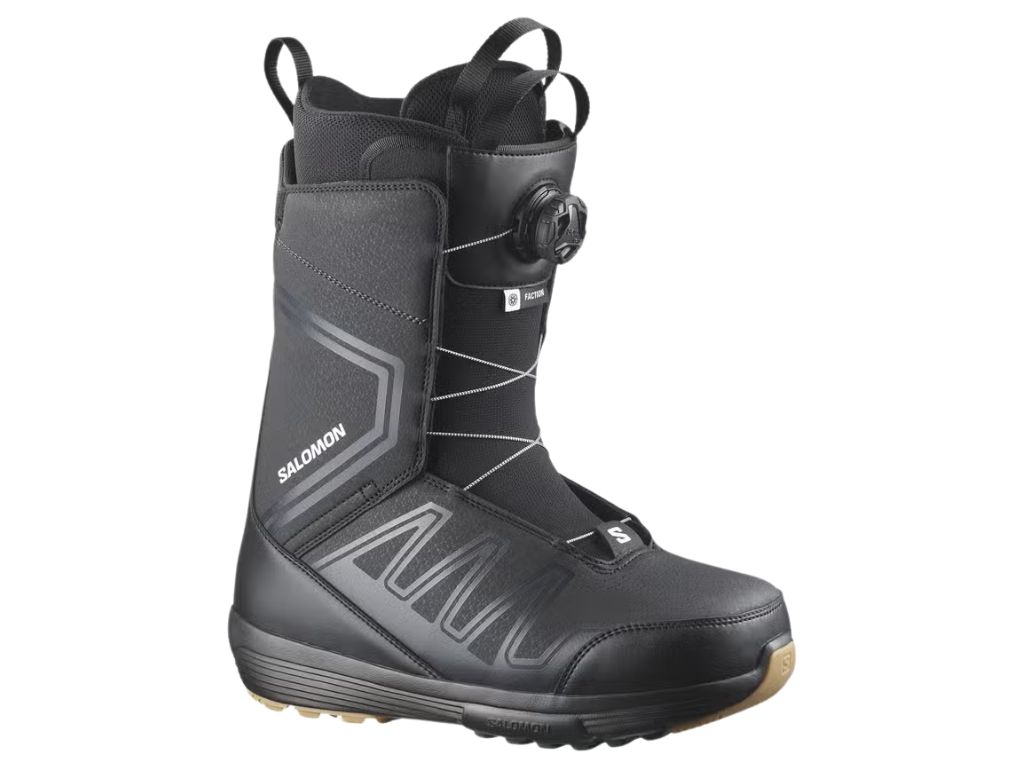
Salomon Faction BOA Men’s Snowboard Boots (2027)
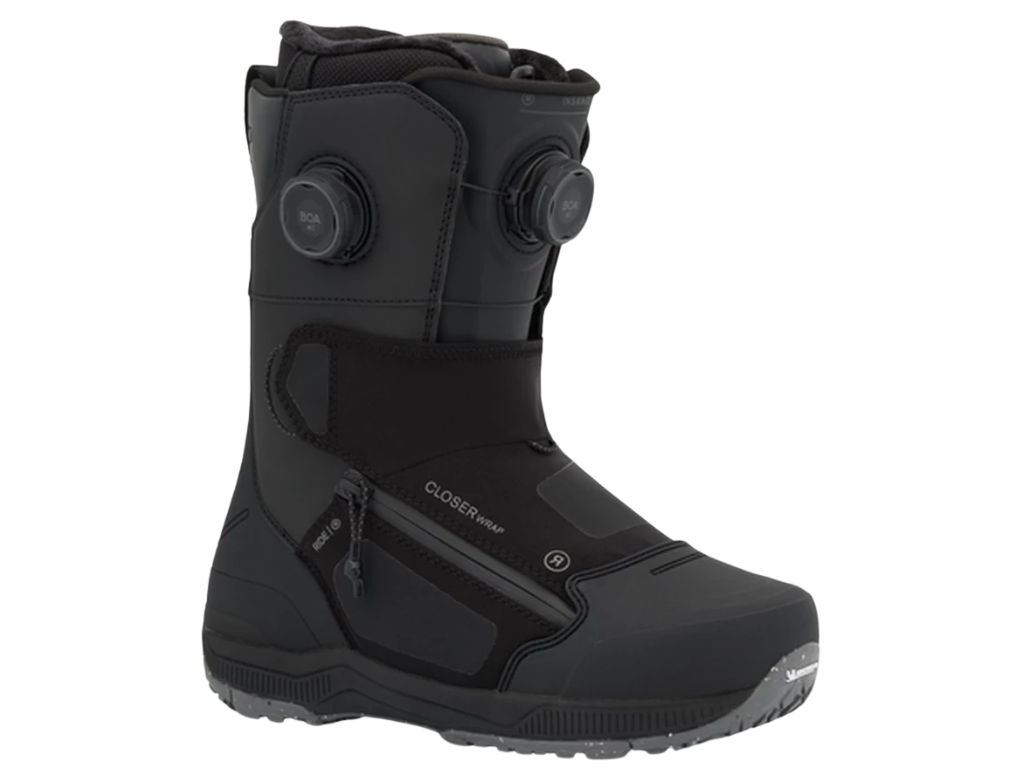
Ride Insano Snowboard Boots (2027)
Top pick details
Snowboard boots aren’t just about keeping your feet warm. Their fit, flex, construction, and lacing systems all influence how comfortable and responsive your setup feels. Below, we take a closer look at the Burton Ruler BOA, Salomon Faction BOA, and RIDE Insano, examining what each boot offers, where it falls short, and which riders we think will benefit most.
Burton Ruler BOA Snowboard Boots (2027)
Pros & Cons
- Medium-to-stiff flex balances support and responsiveness
- Dual-Zone BOA system allows independent adjustment of the upper and lower boot
- Heat-mouldable Imprint 2 liner provides a customizable fit
- 3M Thinsulate insulation helps retain warmth without unnecessary bulk
- Lock-Up Cuff improves ankle support and heel retention
- More expensive than most entry-level snowboard boots
- BOA lacing won't appeal to riders who prefer traditional laces
Why we chose it
We chose the Burton Ruler BOA as our best overall snowboard boot because it offers a balance of comfort, support, and responsiveness that we think will appeal to a wide range of intermediate riders. It has enough structure for confident all-mountain riding without stepping into the extremely stiff territory of more aggressive freeride boots.
One of our favourite features is the Dual-Zone BOA Fit System. Unlike single-dial boots, the Ruler lets you adjust the upper and lower sections independently. That means you can tighten the ankle area for additional support without necessarily applying the same amount of pressure across your forefoot. We think this is particularly useful for riders who want to fine-tune their fit throughout the day.
Comfort is another reason the Ruler made our list. Burton includes its heat-mouldable Imprint 2 liner, 3M Thinsulate insulation, and a Lock-Up Cuff designed to improve heel retention. The DynoGRIP outsole also incorporates cushioning and additional traction at the toe and heel, which we appreciate in a boot intended for full days at the resort.
At roughly $460 CAD, the Ruler BOA isn’t a budget option. However, we think its combination of adjustable fit, supportive construction, insulation, and all-mountain versatility makes it a compelling choice for riders who want one dependable pair of boots for multiple seasons.
Who it's for
We recommend the Burton Ruler BOA for intermediate snowboarders who spend most of their time riding groomed runs, exploring different terrain, and working toward more confident carving.
It’s also worth considering for progressing riders who have outgrown their softer beginner boots and want something more supportive without committing to an extremely stiff setup.
We particularly like it for snowboarders who appreciate the convenience of BOA lacing but want more adjustment than a single-dial system provides.
If you’re a complete beginner or primarily enjoy playful, low-speed freestyle riding, you may find a softer boot more comfortable. Otherwise, the Ruler BOA would be our first model to try on for a versatile all-mountain setup.
Salomon Faction BOA Men's Snowboard Boots (2027)
Pros & Cons
- Affordable compared with many mid-range and premium snowboard boots
- Soft flex offers a forgiving feel for beginners and progressing riders
- Fit To Ride construction is designed to reduce weight and bulk
- Heat-mouldable Custom Fit foam helps improve comfort around the foot and ankle
- Feather 1.0 outsole combines cushioning with rubber traction
- Riders who progress toward more aggressive snowboarding may eventually want something stiffer
- Single-Zone BOA doesn't offer independent upper and lower adjustments
Why we chose it
We chose the Salomon Faction BOA because we believe beginners should be able to buy a comfortable, well-constructed snowboard boot without spending nearly $500. At approximately $330 CAD, the Faction offers several features found on more expensive models while keeping the design approachable for newer riders.
What stands out most to us is its soft, forgiving flex. When you’re learning to snowboard, an overly stiff boot can make movements feel restrictive and unnecessarily demanding. The Faction is designed to allow greater freedom of movement, making it a sensible option for riders practicing turns, building confidence, and spending their first few seasons on the mountain.
We also like Salomon’s Fit To Ride construction, which is designed to reduce the boot’s overall weight and footprint. The 2027 model includes a Feather 1.0 outsole with EVA cushioning and Contagrip rubber, along with heat-mouldable Custom Fit foam in areas where a comfortable, secure fit matters most.
The single BOA dial is another practical feature. While it doesn’t offer the independent adjustment of the Burton Ruler, we think its simplicity will appeal to beginners who want to get their boots tightened quickly without dealing with traditional laces.
The Faction isn’t designed for aggressive freeride performance, and we wouldn’t recommend it to experienced snowboarders looking for maximum responsiveness. However, for someone starting out or riding casually, we think it provides a strong combination of comfort, convenience, and value.
Who it's for
We recommend the Salomon Faction BOA for beginners, casual snowboarders, and budget-conscious riders who prioritize comfort over aggressive performance.
It’s particularly well suited to people who spend most of their time on groomed resort runs, are still developing their turning technique, or want a forgiving boot that doesn’t feel overly restrictive.
We’d also consider it for someone putting together their first complete snowboard setup. Boots are an important part of that investment, and the Faction allows you to choose a model from an established manufacturer without spending a large portion of your budget.
If you’re already comfortable carving at higher speeds or regularly ride steep, demanding terrain, we’d recommend looking at something more supportive, such as the Burton Ruler BOA or RIDE Insano.
Ride Insano Snowboard Boots (2027)
Pros & Cons
- Extremely stiff 10/10 flex is designed for maximum responsiveness
- Dual-Zone BOA system allows precise fit adjustments
- Updated Closer 2.0 with BOA PerformFit Wrap is designed to improve midfoot support
- Intuition Dream Liner offers a supportive, customizable fit
- Michelin Hybrid Traverse outsole provides traction and stability
- Flex Slime Tongue 2.0 helps manage rebound and vibration
- Internal and external J-bars provide additional heel and ankle support
- Extremely stiff construction is unforgiving for beginners
- Premium price makes it one of the more expensive boots on our list
Why we chose it
We chose the RIDE Insano for advanced snowboarders who want a stiff, supportive boot built around precise control and responsiveness. While the Burton Ruler strikes a balance between comfort and performance, the Insano takes a much more aggressive approach.
With a 10/10 flex rating, it’s the stiffest boot in RIDE’s lineup. That makes it particularly appealing to experienced riders who prefer direct power transfer when carving, riding at higher speeds, or navigating steeper terrain. We wouldn’t describe it as an everyday boot for everyone, but that’s exactly why we think it deserves a place on this list.
One of the biggest changes for 2027 is the updated Closer 2.0 system with BOA PerformFit Wrap. Instead of relying entirely on traditional lace routing, the system uses panels that wrap around the midfoot to distribute pressure and improve support. Combined with the dual-zone BOA adjustment, it offers a high level of fit customization.
We’re also interested in the Insano’s approach to heel retention. RIDE uses its Intuition Dream Liner alongside internal and external J-bars and anatomically shaped ankle pockets, all intended to help keep your foot securely positioned inside the boot. For a stiff, responsive boot, minimizing unwanted heel movement is especially important.
Underfoot, the Michelin Hybrid Traverse outsole provides traction, while the Eco +SLIME midsole and updated Flex Slime Tongue are designed to manage impacts and vibrations. These are useful features on a boot intended for demanding all-mountain conditions.
At approximately $530 CAD, the Insano is a significant investment. However, for experienced snowboarders who know they prefer a very stiff boot, we think its construction and extensive fit adjustments justify considering it alongside other premium options.
Who it's for
We recommend the RIDE Insano for advanced and expert snowboarders who prioritize responsiveness, stability, and support over forgiveness.
It’s best suited to confident riders who enjoy powerful carving, steeper terrain, high-speed descents, and aggressive all-mountain or freeride snowboarding.
We’d especially consider it for riders pairing their boots with a medium-stiff or stiff snowboard and responsive bindings. A setup like that can provide a more direct connection between your movements and the board, provided you’re comfortable managing the added stiffness.
However, we wouldn’t recommend the Insano to most beginners or casual snowboarders. Its stiff construction can make smaller movements feel less forgiving, and many recreational riders simply won’t need that level of response.
How to choose the right snowboard boots
Choosing the right snowboard boots is one of the most important decisions you’ll make when putting together your setup. Even the best snowboard and bindings won’t feel right if your boots are uncomfortable or don’t fit properly. We recommend prioritizing fit, comfort, and support over brand names or premium features, especially if you’re buying your first pair.
Start by finding the right size and fit. Snowboard boots should feel snug around your feet and ankles without creating painful pressure points. Your toes should lightly touch the front of the boot when standing upright, then pull back slightly as you bend your knees into a snowboarding stance. Your heel should remain securely in place when you move. Excessive heel lift can reduce control, while boots that are too tight can cause discomfort and numbness. We recommend using the manufacturer’s sizing chart as a starting point and trying on different models whenever possible, since fit varies between brands.
Choose a flex that matches your experience and riding style. Softer boots are generally more forgiving and allow greater ankle movement, making them popular with beginners and freestyle snowboarders. Medium-flex boots offer a balance of comfort and responsiveness for everyday all-mountain riding. Stiffer boots provide more immediate support and power transfer, which can benefit experienced riders who enjoy aggressive carving, higher speeds, and challenging terrain. For most recreational snowboarders, we think a medium-flex boot is a sensible starting point.
Consider which lacing system you prefer. Traditional laces are affordable, easy to replace, and allow you to adjust tension across different parts of the boot. BOA systems use a dial to tighten the boot quickly, making them particularly convenient for adjusting your fit throughout the day. Single-Zone BOA systems are typically simpler and more affordable, while Dual-Zone BOA systems allow independent adjustments to the upper and lower sections. Neither option is automatically better, so we’d recommend choosing whichever provides the most comfortable and secure fit.
Pay attention to the liner and cushioning. Many modern snowboard boots include heat-mouldable liners that can be shaped to better accommodate your feet. Features such as ankle support, insulated liners, cushioned footbeds, and shock-absorbing midsoles can also improve comfort. However, a heat-mouldable liner won’t necessarily fix a boot that’s fundamentally the wrong size or shape for your foot.
Make sure your boots work with your bindings. Most traditional strap bindings accommodate a range of snowboard boot brands, provided you select the correct binding size. However, specialized systems such as Burton Step On require compatible boots and bindings. We recommend checking compatibility before purchasing, particularly if you’re upgrading only one part of your setup.
Finally, don’t choose snowboard boots based on price alone. More expensive boots often include additional fit adjustments, premium liners, and more responsive construction, but those features aren’t necessary for every rider. We’d rather see you spend $300 on boots that fit properly than $500 on a premium pair that causes discomfort.
Of our top picks for 2027, we recommend the Salomon Faction BOA for beginners and budget-conscious riders, the Burton Ruler BOA for versatile all-mountain riding, and the RIDE Insano for advanced snowboarders who prefer a very stiff, responsive boot.
Boot FAQS
What are the best snowboard boots for 2027?
We recommend the Burton Ruler BOA as our best overall snowboard boots for 2027. Its medium-to-stiff flex, Dual-Zone BOA system, and heat-mouldable liner make it a versatile choice for intermediate all-mountain riders. For beginners and budget-conscious snowboarders, we’d recommend the Salomon Faction BOA, while the RIDE Insano is our top pick for advanced riders who want maximum support and responsiveness. However, the best boots for you will ultimately depend on your foot shape, fit, and riding style.
Should snowboard boots fit tight or loose?
Snowboard boots should fit snugly without causing pain, numbness, or excessive pressure. Your toes should lightly touch the front of the boot when standing upright, with some relief when you bend into a snowboarding stance. Your heels should remain securely in place without significant lifting as you move. Avoid buying boots that feel loose from the beginning, since liners typically compress and become roomier with use. We recommend trying on multiple sizes and brands to find the best fit.
How long do snowboard boots last?
Most snowboard boots can last approximately 50–100 days of riding, although their actual lifespan depends on construction, riding style, maintenance, and frequency of use. Casual snowboarders may get several seasons from one pair, while frequent riders might need replacements sooner. Signs that it’s time for new boots include excessive heel movement, packed-out liners, reduced ankle support, damaged soles, and a noticeable loss of responsiveness. If your boots no longer fit securely or provide adequate support, it’s worth considering a replacement.

About the author
Winter Equipment & Gear Review Team
Snowstorms is a Canadian resource dedicated to helping consumers find the right seasonal equipment and sporting gear. Through detailed product reviews, comparisons, and buying guides, Snowstorms helps readers make informed purchasing decisions and find equipment that suits their needs and budget.