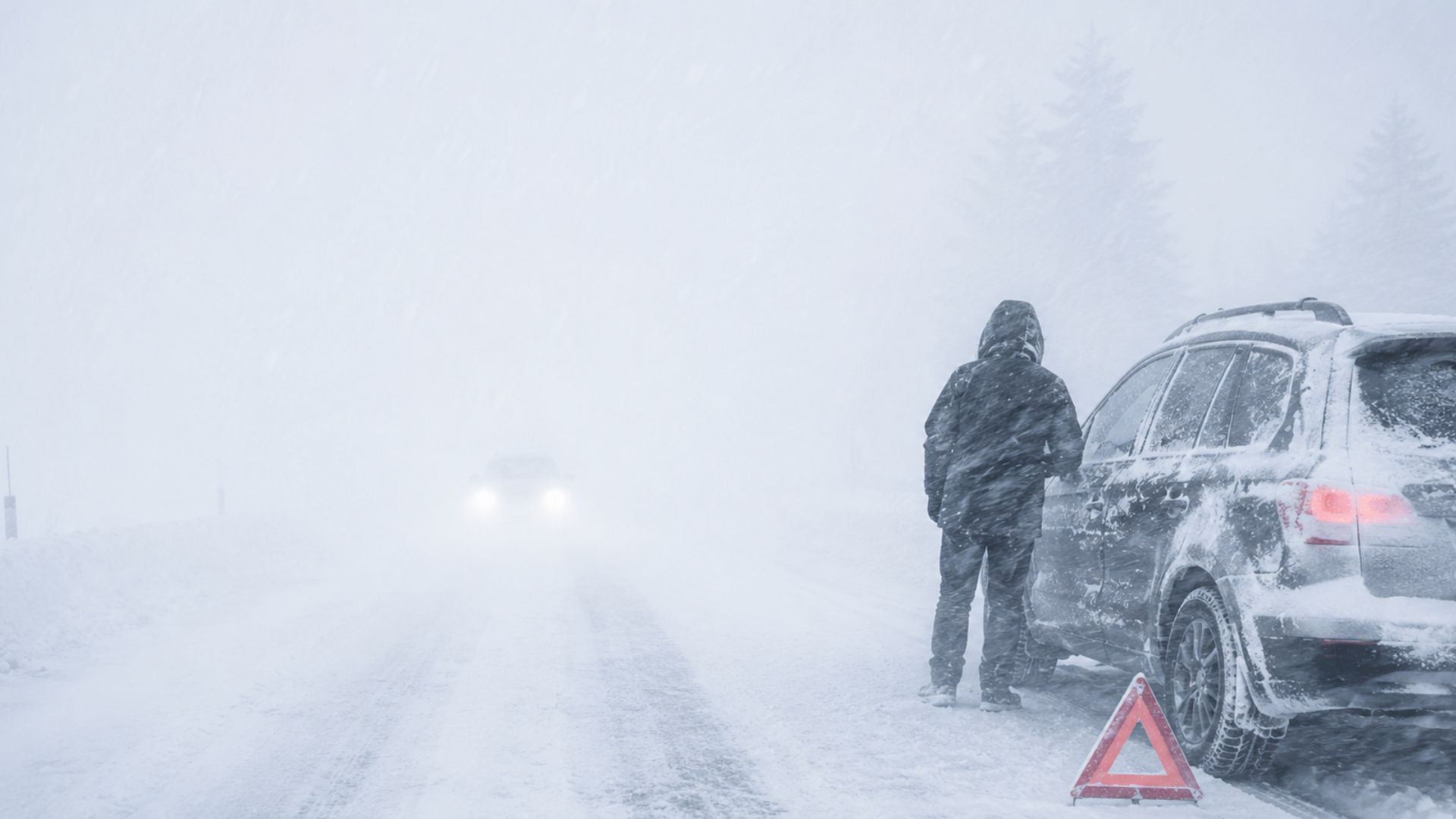

Whiteout conditions can make it extremely difficult to see the road, surrounding vehicles, signs, and even the horizon. If you encounter a whiteout, your priority should be to reduce your risk of a collision and get to a safe location as soon as possible.
Quick Answer: What Should You Do During a Whiteout?
If you encounter a whiteout:
- Avoid driving if possible.
- Slow down gradually if you are already on the road.
- Turn on your headlights so other drivers can see you.
- Increase your following distance significantly.
- Avoid sudden braking, acceleration, or steering.
- Do not rely entirely on the vehicle ahead to determine where the road goes.
- Pull completely off the roadway if you cannot safely continue.
- Stay inside your vehicle if you become stranded.
- Call 911 if you are in immediate danger.
What Is a Whiteout?
A whiteout occurs when blowing or falling snow severely reduces visibility and makes it difficult to distinguish the ground, horizon, and surrounding landscape.
During severe conditions:
- Visibility can fall dramatically.
- Roads can disappear from view.
- Blowing snow can cover lane markings.
- Drivers may become disoriented.
- Vehicles ahead may become difficult to see.
- Snowdrifts can quickly develop across roads.
Whiteouts can occur during heavy snowfall, blizzards, snow squalls, and periods of intense blowing snow.
What to Do If You Encounter a Whiteout While Driving
If visibility suddenly deteriorates:
- Reduce your speed gradually.
- Keep both hands firmly on the steering wheel.
- Turn on your headlights.
- Leave substantially more space between you and the vehicle ahead.
- Avoid cruise control.
- Avoid unnecessary lane changes.
- Brake gently and earlier than normal.
- Accelerate gradually to reduce the chance of losing traction.
- Watch carefully for stopped vehicles, snowdrifts, and changing road conditions.
- Look for a safe place to leave the roadway if conditions become too dangerous.
Do Not Drive Faster Than You Can See
Your speed should allow you to stop within the distance you can clearly see ahead.
If you cannot see far enough ahead to safely react to another vehicle, obstruction, or change in the road, slow down further or find a safe place to stop.
Should You Use Your Hazard Lights During a Whiteout?
Hazard-light rules and recommendations can vary by jurisdiction.
In general:
- Use your regular headlights while driving.
- Make sure your taillights are illuminated.
- Use hazard lights when appropriate to warn other motorists of an emergency or stopped vehicle.
- Follow the traffic laws and official guidance for the province or territory where you are driving.
When Should You Pull Over?
Consider leaving the roadway when:
- You can no longer clearly identify the road.
- Visibility approaches zero.
- You cannot maintain a safe distance from other vehicles.
- Snow accumulation makes the road difficult to navigate.
- Your vehicle begins losing traction.
- Conditions become worse than you are comfortable driving through.
Whenever possible, exit the highway and stop somewhere away from moving traffic, such as a rest area, parking lot, or other safe location.
If You Have to Stop on the Road
Stopping on or immediately beside a roadway during a whiteout can be dangerous because approaching drivers may not see you.
If continuing is more dangerous than stopping:
- Get as far away from active traffic lanes as safely possible.
- Avoid stopping immediately after a hill or curve.
- Keep your seat belt fastened.
- Make your vehicle visible to approaching motorists.
- Stay aware that other vehicles may leave the roadway.
- Do not stand outside your vehicle near moving traffic.
What to Do If Your Car Gets Stuck During a Whiteout
If your vehicle becomes stuck:
- Stay calm.
- Stay with your vehicle unless you can clearly reach a safe building nearby.
- Call for roadside assistance if available.
- Call 911 if you are in immediate danger.
- Keep your phone charged and conserve its battery.
- Make your vehicle as visible as possible.
- Clear snow away from the exhaust pipe before running the engine.
- Periodically check that drifting snow has not blocked the exhaust.
- Use blankets and additional clothing to stay warm.
- Avoid unnecessary exposure to the cold.
Never run a vehicle with a snow-blocked exhaust pipe. Exhaust gases can enter the passenger compartment and create a potentially deadly carbon monoxide hazard.
If You Are Caught in a Whiteout While Walking
Whiteouts are also dangerous for pedestrians because familiar surroundings can quickly disappear.
If you are outside:
- Seek shelter as soon as possible.
- Avoid unnecessary travel.
- Stay on known routes.
- Do not attempt long walks through unfamiliar areas.
- Keep exposed skin covered.
- Protect your face from wind and blowing snow.
- Stay away from active roads when visibility is poor.
- Use your phone or GPS cautiously, but do not depend on it as your only navigation method.
- Call for help if you become lost or are unable to reach shelter safely.
How to Prepare Before Driving in Whiteout Conditions
Before travelling during potentially severe winter weather:
- Check the latest weather forecast.
- Check for weather alerts.
- Review highway and road conditions.
- Delay unnecessary travel when severe conditions are expected.
- Keep your fuel tank adequately filled.
- Fully charge your phone.
- Tell someone where you are going.
- Keep a winter emergency kit in your vehicle.
Your Winter Emergency Kit Should Include
- Warm blankets
- Extra winter clothing
- Gloves and toque
- Flashlight
- Spare batteries
- Phone charger or power bank
- Ice scraper and snow brush
- Small shovel
- Traction aid, sand, or non-clumping cat litter
- Jumper cables
- First-aid kit
- Bottled water
- Non-perishable food
- Reflective warning equipment
The Most Important Rule During a Whiteout
Do not underestimate rapidly deteriorating visibility.
If a whiteout is forecast and travel is unnecessary, staying off the road is generally the safest option. If you are already driving when conditions deteriorate, slow down, increase your following distance, remain visible, and leave the roadway at a safe location when necessary.
If you become stranded, stay with your vehicle, protect yourself from the cold, keep the exhaust pipe clear of snow, and contact emergency services if you are in danger.