
What Does a Yellow Air Quality Warning Mean?
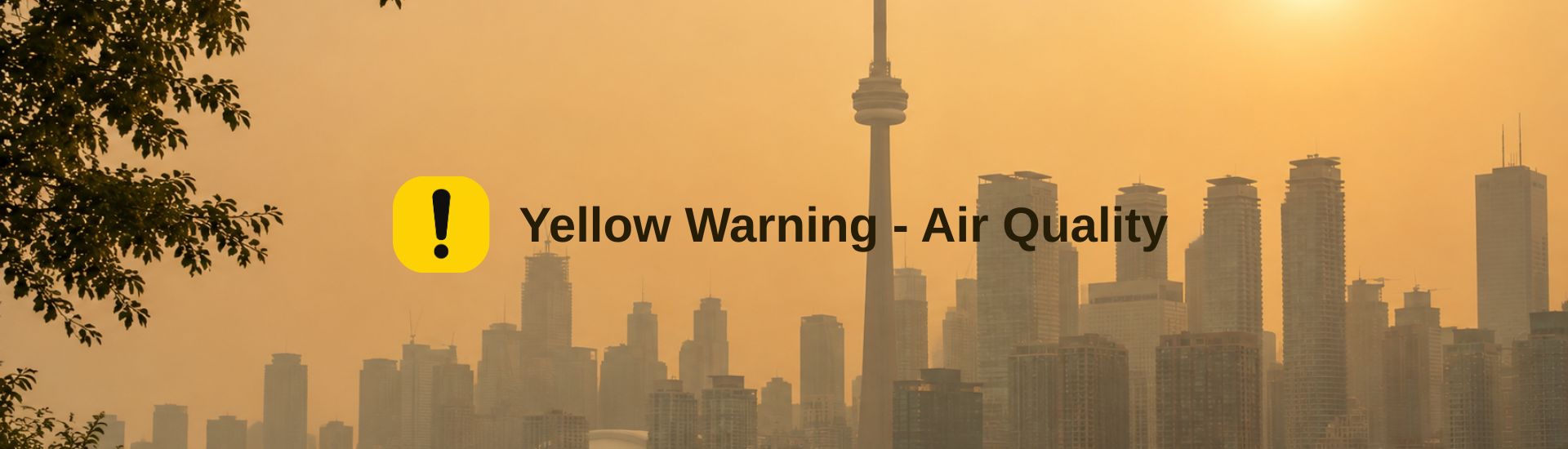
A yellow air quality warning indicates that air pollution has reached a level where sensitive individuals may begin to experience health effects, while the general population is unlikely to be significantly affected. In Canada, this typically corresponds to an Air Quality Health Index (AQHI) of 7 to 9, depending on the issuing authority and forecast conditions.
People who are more vulnerable, including children, older adults, pregnant individuals, and those with asthma, COPD, or heart disease, should pay closer attention during an air quality warning. Outdoor exercise or prolonged exposure may trigger symptoms such as coughing, wheezing, eye irritation, or difficulty breathing.
For most healthy adults, daily activities can usually continue as normal. However, if the air appears smoky or you notice symptoms, it is a good idea to reduce strenuous outdoor activity until conditions improve.
A yellow air quality warning serves as an early alert that pollution levels are becoming elevated. Monitoring forecasts and taking simple precautions early can help reduce exposure before conditions worsen.
Air Quality Warning Levels Explained
| Yellow Warning – Air Quality | AQHI of 7–9 | Risk: Moderate–High |
| Orange Warning – Air Quality | AQHI of 10+ | Risk: High |
Who Is Most at Risk During a Yellow Air Quality Warning?
People who should be most cautious include:
- Children and teenagers who spend long periods outdoors.
- Seniors, who may be more sensitive to changes in air quality.
- Individuals with asthma, COPD, or other chronic lung diseases.
- People living with heart disease.
- Pregnant individuals.
- Anyone who has previously experienced symptoms during periods of poor air quality.
These individuals may notice coughing, wheezing, throat irritation, watery eyes, or shortness of breath sooner than the general population. If symptoms develop, reducing outdoor activity and spending more time indoors can help minimize further exposure.
What Causes a Yellow Air Quality Warning?
A yellow air quality warning is issued when pollution levels become elevated enough to pose a health risk for sensitive individuals. Although air quality has deteriorated, conditions are generally less severe than during higher-level warnings.
Several factors can contribute to a yellow warning, including:
- Smoke from nearby or distant wildfires.
- Increased levels of ground-level ozone during warm, sunny weather.
- Vehicle emissions in heavily populated areas.
- Industrial pollution.
- Weather patterns that prevent pollutants from dispersing efficiently.
In many cases, a yellow warning serves as an early indication that air quality is worsening. If smoke continues to increase or weather conditions prevent pollutants from clearing, the warning may be upgraded to a higher level.
Yellow Warning Air Quality FAQs
A yellow air quality warning indicates that pollution levels have become elevated enough to affect people who are more sensitive to poor air quality. Most healthy individuals can continue their normal activities, but vulnerable groups should take extra precautions.
Most healthy adults can usually continue light to moderate outdoor activity. However, people with asthma, heart disease, or other respiratory conditions should consider reducing strenuous exercise if they begin experiencing symptoms.
Children, seniors, pregnant individuals, people with asthma or COPD, those with heart disease, and outdoor workers should be especially cautious, as they are more likely to experience health effects.
Yes. If pollution levels continue to rise due to wildfire smoke or changing weather conditions, a yellow warning may be upgraded to an orange air quality warning.
Continue monitoring AQHI updates, reduce prolonged outdoor activity if you’re in a higher-risk group, and move indoors if you begin experiencing symptoms such as coughing or difficulty breathing.
Not necessarily. A yellow warning serves as an early alert that air quality has deteriorated. While most healthy people are unlikely to experience significant health effects, sensitive individuals should take steps to reduce their exposure.